April 10, 2026·7 min read·comparison, myth-busting, metabolic
AOD-9604 vs HGH Fragment 176-191—the myth
They're the same peptide. The confusing names explained, the failed trials, and why we list both.
They're the same peptide. The confusing names explained, the failed trials, and why we list both.
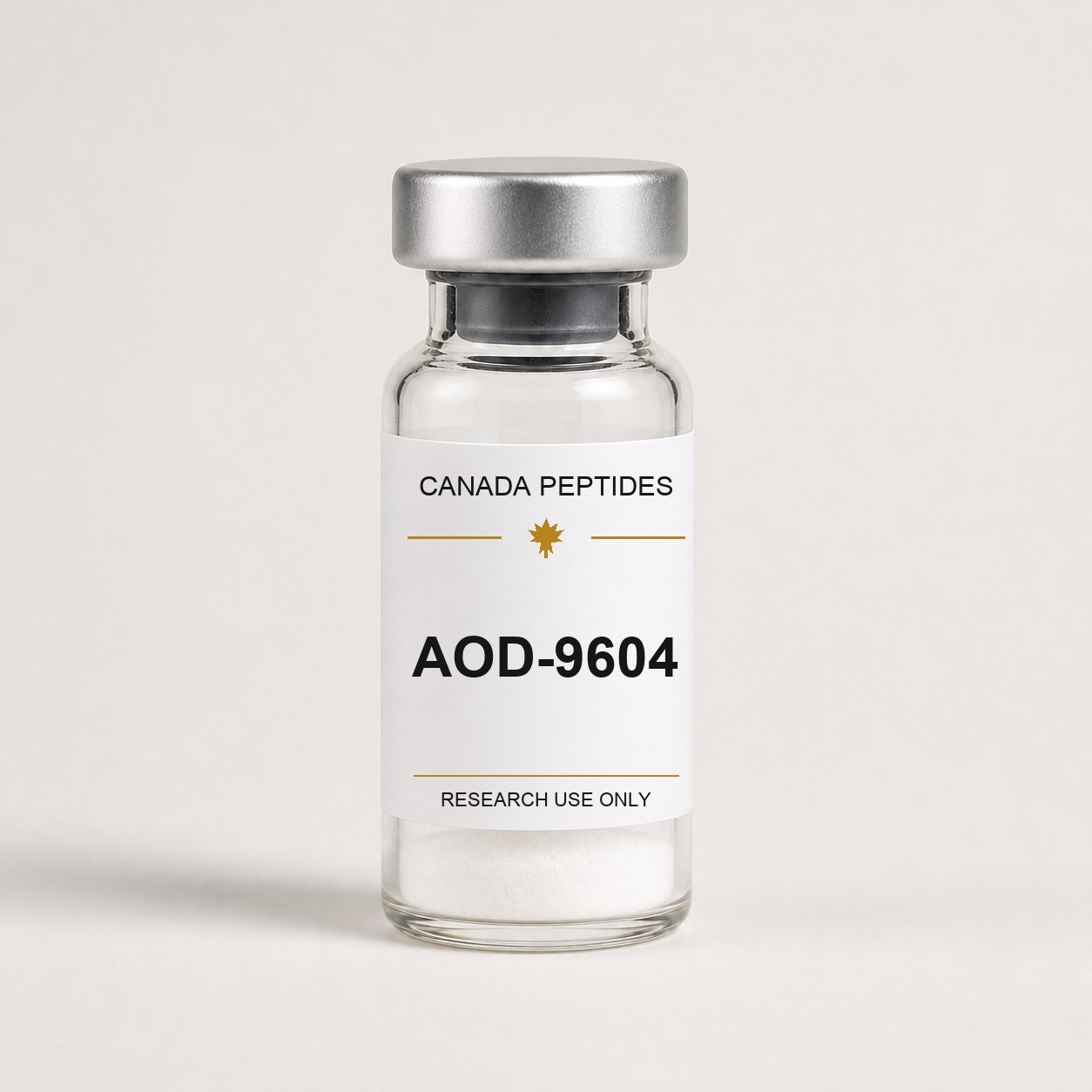
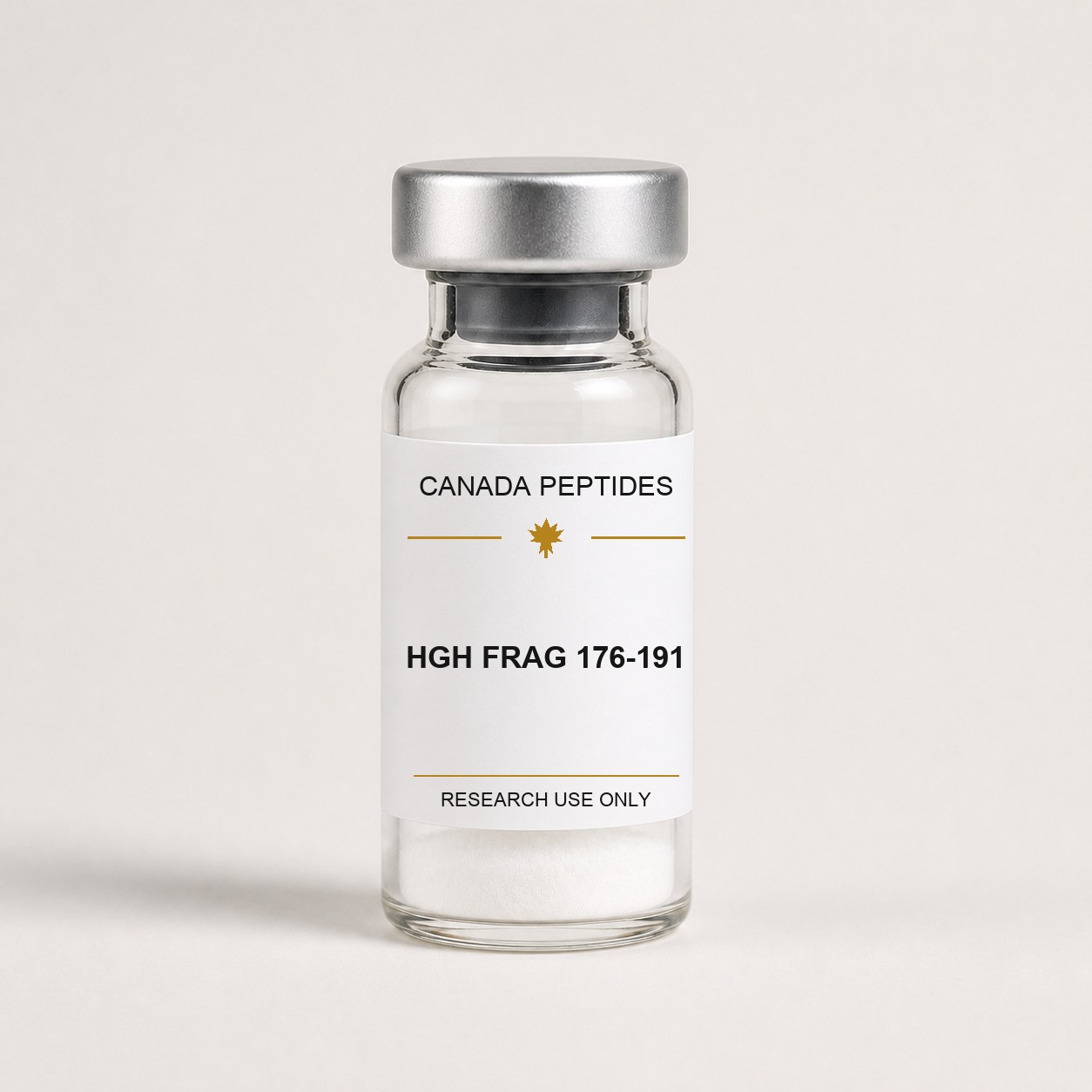
Here's a truth that surprises most researchers: AOD-9604 and HGH Fragment 176-191 are not two different compounds. They are the exact same peptide, labeled and marketed under different names due to the historical accident of pharmaceutical development. The persistence of two names in the research community has created a mythology—that they're variants with slightly different profiles, or that one is "real research" while the other is "cosmetic." Neither is true. They're identical. Understanding this means understanding why marketing and nomenclature created the confusion in the first place.
Human growth hormone is a 191-amino-acid protein. Residues 177–191 form a 15-amino-acid fragment. That sequence, when synthesized, is active in lipolysis experiments—it shows fat-loss properties in animal models without many of the glucose-impairing side effects of full-length HGH. To improve stability, researchers added an N-terminal tyrosine, extending the sequence to 16 amino acids. That's the peptide.
Call it by its sequence: HGH Fragment 176-191 (really 1-16 with the N-terminal tyrosine prepended). Call it by its pharmaceutical name: AOD-9604 (AOD = Australian Origin Development, 9604 being Metabolic Pharmaceuticals' catalog number). Same 16 amino acids. Same mechanism. Same pharmacokinetics. Same research profile.
Metabolic Pharmaceuticals, an Australian firm, acquired the intellectual property for this fragment in the late 1990s. They named it AOD-9604 internally and began human clinical development. The mechanism—hypothesized to be a GH-fragment that retains lipolytic activity while avoiding glucose dysregulation—was compelling. Over the course of a decade, they ran multiple human trials for body-composition endpoints.
Here's the part the research community rarely discusses: AOD-9604 failed to meet primary weight-loss endpoints in human trials. Specifically, the phase 2b trial did not demonstrate statistical superiority over placebo for the primary weight-loss endpoint. This was a binary moment—prove the compound works in humans, or shelve it. Metabolic Pharmaceuticals shelved it.
The mechanism wasn't wrong. The trials likely suffered from inadequate dose selection, wrong patient population (diabetic vs non-diabetic), or statistical underpowering. But from a regulatory perspective, the clinical trial failure meant the end of the development arc as a pharmaceutical. The molecule never achieved FDA approval for any indication.
Years later, the FDA granted AOD-9604 "GRAS" (Generally Recognized As Safe) status as a dietary supplement ingredient under limited conditions. This opened a different regulatory pathway—not pharmaceutical, but supplement. Once that happened, catalog suppliers began listing the same molecule under its sequence name, HGH Fragment 176-191, partly to avoid trademark complications and partly to repackage a "failed pharmaceutical" as a "research peptide."
From a chemistry standpoint, nothing changed. The molecule is still AOD-9604. It's still HGH Fragment 176-191. The nomenclature shift was a marketing move, not a scientific one.
The theoretical advantage of this fragment is that it appears to retain growth hormone's lipolytic properties without the glucose-impairing or IGF-1-elevating effects of full-length HGH. The exact mechanism remains debated. Early work proposed that it works via a non-IGF-1, non-GH-receptor pathway—perhaps a direct adipose-tissue target or a secondary GH-axis receptor.
More recent work suggests that the mechanism might involve GH-receptor signaling on adipose tissue specifically, bypassing the hepatic and metabolic glucose-dysregulation that full-length HGH triggers. But the molecular target remains uncertain, which is why the clinical trial failure is important context—it's harder to optimize a treatment when the mechanism is ambiguous.
Metabolic Pharmaceuticals' phase 2b trial enrolled obese or overweight adults and assessed weight loss over 12 weeks. The primary endpoint—weight reduction—was not met at statistical significance compared to placebo. Secondary endpoints showed some benefit, but pharmaceutical development requires primary-endpoint success. One failed trial doesn't prove the compound is ineffective; it proves that under those specific conditions (dose, population, duration, measurement), the effect size was too small to distinguish from placebo.
This is crucial information that most research-peptide discussions omit. The mythology is that AOD-9604/HGH Fragment 176-191 is a potent fat-loss agent. The clinical reality is that in the one large randomized human trial, it didn't outperform placebo on the weight-loss metric. Animal models and mechanistic studies are real, but human evidence is limited and doesn't support dramatic efficacy.
The mechanistic and pre-clinical case is solid. In rodent models, the fragment does reduce body fat and preserve lean mass. In vitro work shows that it activates lipolysis and reduces lipogenesis in cultured adipocytes. The dose-response is clean. The safety profile is benign. But this pre-clinical evidence comes from the context of Metabolic Pharmaceuticals' development program, conducted in the late 1990s and early 2000s. Subsequent human research has been sparse.
We list AOD-9604 and HGH Fragment 176-191 in the catalog because research conventions follow nomenclature patterns. Some researchers search for "AOD-9604" (the pharmaceutical name), others for "HGH Fragment 176-191" (the sequence name). Both queries need to return valid results. Are they different products? No. We carry the same peptide at different formulation strengths and label it both ways to match how researchers reference it.
This is a case where catalog necessity drives the listing decision, not chemistry. Ideally, we'd have one name and one product. Practically, researchers coming from different literature bases (pharmaceutical development vs sequence-level research) expect different nomenclature.
If you're considering this peptide for a protocol, the honest framing is: the mechanism is plausible, the pre-clinical case is reasonable, but the human evidence base is the failed pharmaceutical trial plus a handful of observational reports. It's not magic and it's not proven. It's a research hypothesis—that a GH-fragment can produce selective lipolysis without systemic GH's glucose-dysregulating effects—that makes mechanistic sense and has pre-clinical support, but hasn't been validated in a large human RCT.
Run it with a hypothesis. Measure body composition, fasting glucose, and lipid profiles at baseline and regularly throughout the cycle. Compare to your baseline and to the literature. If the effect is real in your physiology, the data will show it. If it's not, you'll have avoided the mythology and generated real knowledge about the compound in your system.
| Property | AOD-9604 / HGH Frag 176-191 |
|---|---|
| Sequence | 16 amino acids (HGH residues 177-191 + N-terminal Tyr) |
| Origin | HGH fragment; modified for stability |
| Proposed mechanism | GH-fragment lipolysis without IGF-1 elevation |
| Phase 2b trial result | Did not meet primary weight-loss endpoint vs placebo |
| FDA status | GRAS (dietary supplement) |
| Human evidence | Failed pharmaceutical trial + mechanistic pre-clinical |
| Honest expectation | Plausible mechanism, weak human data, requires hypothesis testing |
AOD-9604 and HGH Fragment 176-191 are the same 16-amino-acid peptide under different names, available at different concentrations to match researcher nomenclature conventions.
Are AOD-9604 and HGH Fragment 176-191 the same peptide? Yes. They are identical—same 16 amino acids, same mechanism. AOD-9604 is the pharmaceutical name (Metabolic Pharmaceuticals catalog number); HGH Fragment 176-191 is the sequence designation. Marketing and nomenclature created the confusion.
Did AOD-9604 work in human trials? No. The phase 2b trial did not achieve statistical superiority over placebo for the primary weight-loss endpoint. The mechanism is plausible and pre-clinical data is supportive, but human evidence is limited to one failed trial.
Why would you use AOD-9604/HGH Fragment 176-191 if it failed in trials? The trial failure doesn't prove the peptide doesn't work—it proves that under those specific conditions (dose, population, duration), the effect size was too small to distinguish from placebo. Mechanistic hypothesis-testing in your own protocol remains valid.
What's the theoretical advantage of this fragment over full-length HGH? Theoretically, this fragment retains HGH's lipolytic properties while avoiding glucose dysregulation and IGF-1 elevation that full-length HGH triggers. The exact mechanism remains debated, which is why clinical validation is important.