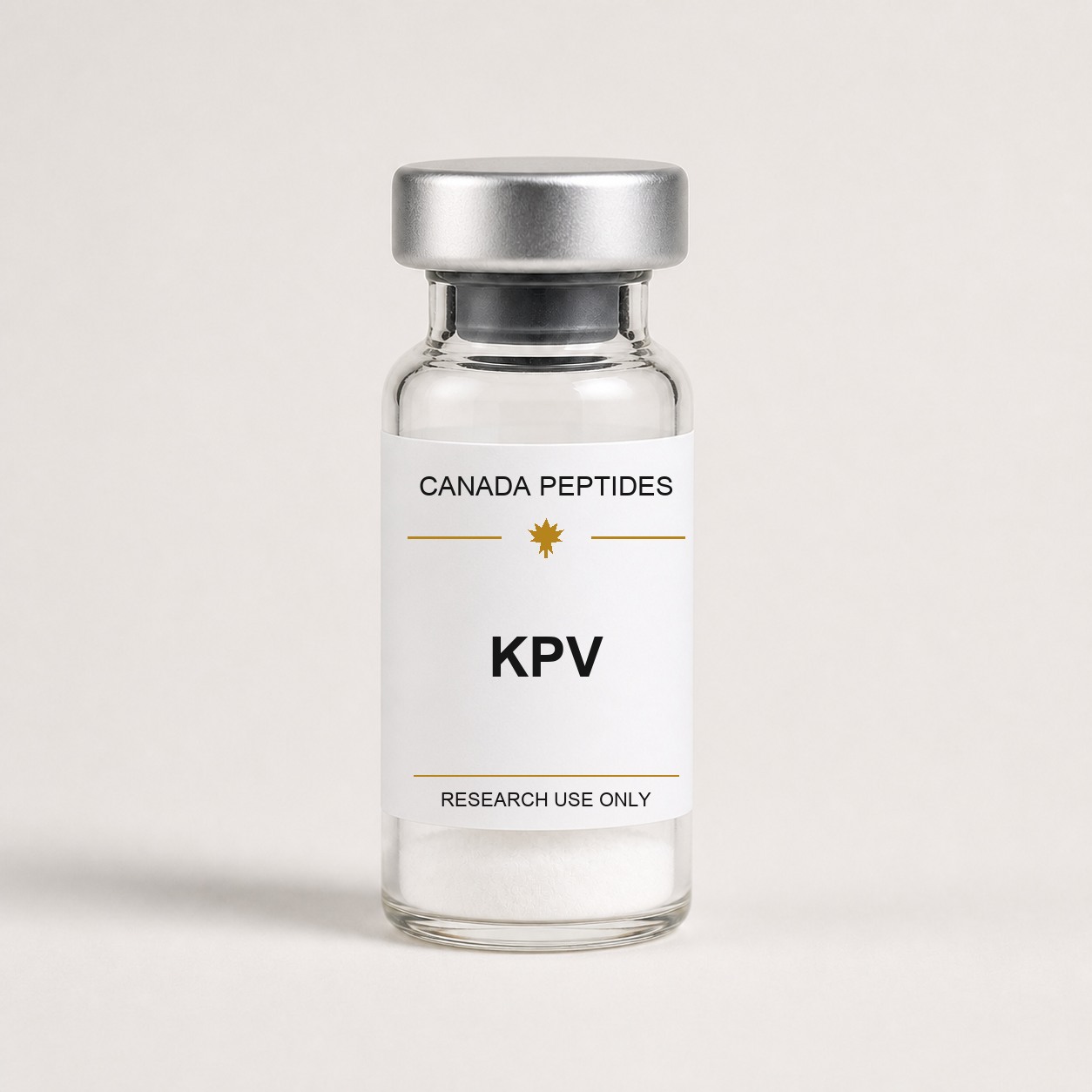
July 6, 2026·4 min read·KPV, peptide research, anti-inflammatory, alpha-MSH, research overview
KPV — a research overview
A measured research overview of the KPV peptide: what the lysine-proline-valine tripeptide is, its PepT1/NF-kB anti-inflammatory mechanism, the preclinical colitis and skin data, and honest limits.
KPV is a synthetic tripeptide — lysine-proline-valine — that corresponds to the three C-terminal residues of alpha-melanocyte-stimulating hormone (alpha-MSH), the 13-amino-acid peptide with the sequence SYSMEHFRWGKPV. In the preclinical literature KPV is studied almost entirely as an anti-inflammatory fragment: a small, stable messenger that reproduces much of the parent hormone's immunomodulatory activity while shedding its pigmentary and metabolic effects. This overview summarizes what the published research actually shows, where the data are strong, and where they remain immature.
What KPV is
Alpha-MSH is a melanocortin peptide best known for its role in pigmentation, but decades of work established that it also carries potent anti-inflammatory and antimicrobial activity. Structure-activity studies traced much of that anti-inflammatory signal to the C-terminal end of the molecule, and the isolated tripeptide KPV was found to reproduce a large share of the parent peptide's effect in vitro and in vivo. Because it is only three residues long, KPV is comparatively simple to synthesize, relatively stable, and — importantly for the mechanistic story below — small enough to be handled by peptide transporters rather than depending solely on cell-surface hormone receptors.
The proposed mechanism
The most-studied aspect of KPV is how it reaches and quiets inflammatory cells. A recurring finding is that KPV is a substrate for PepT1, the intestinal di/tripeptide transporter, which is upregulated on epithelial and immune cells during inflammation. In cultured human intestinal epithelial cells (Caco-2/BBE), KPV is taken up via PepT1 and then appears to act intracellularly, interfering with pro-inflammatory signaling — notably the NF-kB and MAP-kinase pathways that drive cytokine transcription.
A notable point in the literature is that KPV's anti-inflammatory action does not seem to require the melanocortin receptors that mediate many of alpha-MSH's other effects. That receptor-independent, transporter-mediated route is part of why KPV attracts research interest as a distinct entity rather than as a mere alpha-MSH stand-in: it concentrates in the tissues where PepT1 is elevated, which tend to be exactly the inflamed ones.
What the research shows
Most of the substantive KPV data come from rodent models of gut inflammation:
In dextran sulfate sodium (DSS) colitis models, orally or locally delivered KPV reduced inflammatory cytokine levels and improved gross markers of disease such as body weight and colon length.
In a colitis-associated cancer model (AOM/DSS), KPV reduced colonic tumorigenesis, and the effect was reported to be PepT1-dependent — reinforcing the transporter-based mechanism.
In dermatology, KPV appears in patents and preclinical reports for inflammatory skin conditions; KPV-loaded hydrogels have been described as reducing local inflammation, supporting tissue regeneration, and showing activity against bacteria including MRSA — consistent with alpha-MSH's known antimicrobial profile.
Across these reports the recurring themes are reduced NF-kB-driven cytokine output, low observed toxicity in the models used, and delivery that exploits inflammation-associated transporters.
Where it sits versus related compounds
KPV is best understood alongside the other small "repair and calm" peptides rather than the growth-hormone or GLP-1 categories. GHK-Cu is another short peptide studied for skin and tissue signaling, and the broader picture of how these fragments are grouped is covered in Skin Peptides Explained: Melanotan 2, GHK-Cu & KPV. Where a compound like BPC-157 is framed around tissue repair, KPV's research identity is specifically anti-inflammatory and immunomodulatory — a signal-dampener rather than a growth promoter.
Honest data-maturity caveats
The candid summary is that KPV's evidence base is preclinical. The most convincing results come from cell culture and rodent disease models, supported by patent filings. Robust, peer-reviewed human clinical trials establishing efficacy, dosing, or long-term safety for any indication are not established in the public literature. Rodent colitis models do not automatically translate to human disease; bioavailability, stable dosing, and formulation (oral, topical, or injectable) all remain open research questions. Treat the anti-inflammatory story as mechanistically plausible and preclinically supported — not clinically proven.
You can explore the compound itself on the KPV product page. For how researchers reason about early-stage evidence generally, see the site's guidance on reading the primary literature.
Frequently asked questions
What is KPV derived from?
KPV (lysine-proline-valine) is the C-terminal tripeptide of alpha-MSH, a 13-residue melanocortin peptide. It reproduces much of alpha-MSH's anti-inflammatory activity without the parent hormone's pigmentary effects.
How is KPV thought to work?
Research suggests KPV enters cells via the PepT1 di/tripeptide transporter — which is elevated on inflamed tissue — and then interferes with intracellular NF-kB and MAP-kinase signaling that drives cytokine production. Notably, this action appears largely independent of the melanocortin receptors.
Is there human clinical evidence for KPV?
No robust human clinical trials are established in the public literature. The meaningful data come from in vitro studies and rodent models of colitis and skin inflammation, plus patent filings. It should be regarded as a preclinical research compound.
How does KPV compare to GHK-Cu?
Both are short peptides studied in skin and tissue contexts, but their research identities differ: GHK-Cu is studied largely for remodeling and skin signaling, while KPV is studied specifically as an anti-inflammatory, immunomodulatory fragment.
Is KPV approved for use?
No. KPV is a research-grade compound intended for laboratory research only. It is not approved for human or veterinary use, and nothing here should be read as medical or dosing advice.