April 9, 2026·4 min read·mitochondrial, metabolic, longevity, compound-overview
MOTS-c — a research overview
Mitochondrial-derived peptide regulating AMPK and metabolic aging, with emerging human data on insulin sensitivity and exercise physiology.
Mitochondrial-derived peptide regulating AMPK and metabolic aging, with emerging human data on insulin sensitivity and exercise physiology.
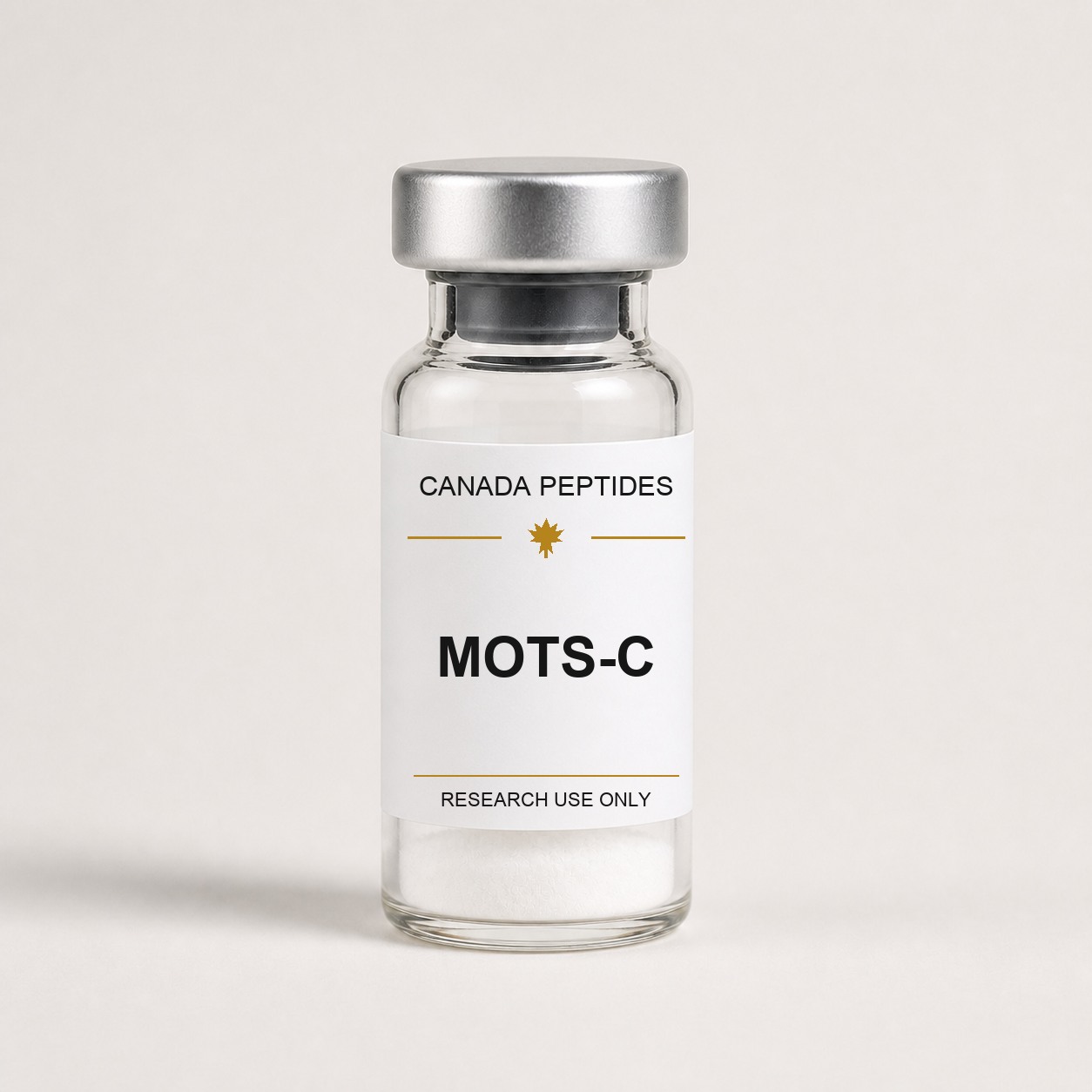
MOTS-c (mitochondrial open-reading frame of the twelve S rRNA-c) is a 16-amino-acid peptide encoded within the mitochondrial genome itself — specifically, within the 12S ribosomal RNA gene. It was discovered by Changhan Lee and Pinchas Cohen at the University of Southern California and published in Cell Metabolism in 2015. The Lee lab remains the primary research group, and they continue to publish novel endpoints and mechanistic work regularly.
What makes MOTS-c distinct is its origin story: it's an endogenous molecule, not a synthetic derivative. Circulating levels decline with age, correlating with losses in insulin sensitivity, mitochondrial function, and skeletal muscle metabolic capacity. This natural decline-with-age pattern anchors the aging-hypothesis more directly than compounds with no circulating baseline.
MOTS-c activates AMPK (AMP-activated protein kinase), the cellular energy sensor that drives mitochondrial biogenesis, oxidative metabolism, and autophagy. This is the same pathway activated by caloric restriction, exercise, and metformin — making MOTS-c an exercise-mimetic in molecular terms. Beyond AMPK, the Lee lab has reported effects on the folate-methionine cycle, a metabolic hub that influences one-carbon metabolism and epigenetic regulation. This mechanistic distinction separates MOTS-c from metabolic compounds like Tirzepatide, which act on GLP-1 and GIP receptor pathways instead.
The downstream phenotype in rodent models is consistent: improved insulin sensitivity, increased oxygen consumption, enhanced endurance capacity, and attenuation of age-related metabolic decline. The magnitude of effect is modest but reliable, and the mechanism is orthogonal to GLP-1 or other metabolic pathways in the peptide toolkit.
MOTS-c is administered subcutaneously in research protocols. Plasma half-life characterization is still incomplete — the Lee lab has reported data suggesting a half-life on the order of hours, but the tissue distribution and local duration of effect are not fully mapped. Peak plasma concentration occurs within minutes to hours post-injection in animal models, with a decline curve consistent with renal clearance and tissue uptake.
Human pharmacokinetics are emerging. Small studies measuring post-exercise plasma MOTS-c levels and acute metabolic responses suggest insulin sensitivity improvements correlate with MOTS-c exposure, but the full dose-response curve and steady-state kinetics in humans are preliminary.
Rodent studies form the bulk of the Epithalon and longevity literature; MOTS-c has a narrower but deepening body of work. Diet-induced obese mice treated with MOTS-c show improved fasting glucose, reduced insulin area-under-curve, and increased energy expenditure. Aged mice show attenuated muscle wasting and better endurance performance. A small number of human trials have measured acute metabolic responses to MOTS-c in the context of glucose tolerance or exercise, with preliminary evidence of insulin-sensitizing effects and increased aerobic capacity.
The gap to clinical significance remains wide. These are small, short-duration studies, not the multi-year, thousands-participant trials that characterize mature pharmacotherapies. But the direction and consistency of effect in rodents, combined with the mechanistic plausibility (AMPK activation is well-validated), suggest MOTS-c is worth following as the human dataset expands.
MOTS-c is typically discussed in the context of metabolic stacks — alongside Epithalon and DSIP, as part of a multi-mechanism longevity protocol. The rationale is clear: these peptides target different nodes of aging (cellular senescence signals, mitochondrial regulation, sleep/circadian function), and a combination might produce a more robust phenotype than any single molecule. The empirical evidence for synergy is absent, but the design logic is sound. Designing such protocols systematically is where the four-phase research cycle becomes essential.
Subcutaneous protocols in human research typically run 12 to 16 weeks, with metabolic endpoints (fasting glucose, insulin, VO₂ max, body composition) assessed at baseline and weeks 4, 8, 12. Weekly or twice-weekly dosing is standard, though dose-response curves in humans are not yet fully characterized.
MOTS-c is NeuroForge's entry point into mitochondrial-targeting peptides. It differs from Epithalon in mechanism (metabolic vs. telomerase/circadian) and from longevity-stack peptides in specificity — it's a single-node intervention, not a broad-spectrum aging compound. Readers should understand that the human data is emerging but preliminary, the rodent evidence is solid and consistent, and the mechanistic hypothesis is well-anchored to validated biology.
What is MOTS-c and where does it come from? MOTS-c is a 16-amino-acid peptide encoded within the mitochondrial genome itself, discovered by Changhan Lee's lab at USC. It circulates endogenously and declines with age, making it a genuine aging biomarker rather than a synthetic derivative.
Does MOTS-c actually increase exercise capacity? In rodent models, MOTS-c enhances endurance performance and VO₂ max via AMPK activation. Small human studies show acute improvements in insulin sensitivity and aerobic markers, but the data is preliminary and effect sizes are modest.
How is MOTS-c different from GLP-1 peptides? MOTS-c activates AMPK and mitochondrial biogenesis; GLP-1 agonists like Semaglutide work on insulin secretion and appetite. They target different metabolic nodes — MOTS-c is more of an exercise-mimetic, GLP-1 is metabolic control.
How often do you inject MOTS-c? Most human protocols use weekly or twice-weekly subcutaneous injections over 12-16 weeks, with metabolic endpoints measured at baseline and weeks 4, 8, 12. Optimal dosing and frequency in humans are not yet fully characterized.