June 26, 2026·3 min read·nootropic, cognitive, compound-overview, bdnf, neuroprotection
Semax — a research overview
Semax is a synthetic ACTH(4-10) analogue studied as a nootropic and neuroprotective peptide. Its mechanism, the BDNF/NGF neurotrophic story, and what the (Russia-dominated) research actually shows.
Semax is a synthetic heptapeptide developed in Russia as a stable analogue of a natural ACTH fragment. It is studied primarily as a nootropic and neuroprotective compound — a research peptide that appears to work less like a stimulant and more by nudging the brain's own neurotrophic machinery.
Structure and origin
Semax is the heptapeptide Met-Glu-His-Phe-Pro-Gly-Pro, derived from ACTH(4-10) — the cognitively active core of adrenocorticotropic hormone. The parent ACTH(4-10) fragment carried nootropic properties but degraded within minutes in the body. Russian researchers extended it with a Pro-Gly-Pro tripeptide on the C-terminus, which sharply improved stability and bioavailability while preserving — and in several models amplifying — the neurotropic activity. The result is a molecule with a short plasma half-life but a long behavioural footprint.
How Semax works
The most-cited mechanism is neurotrophic. Semax upregulates BDNF (brain-derived neurotrophic factor) and NGF (nerve growth factor) along with their receptors TrkB and TrkA. In rodent hippocampus, BDNF messenger RNA has been reported to roughly triple within hours of administration, with a measurable rise in TrkB phosphorylation. Because these neurotrophins drive dendritic growth, synaptic maintenance, and neuronal mitochondrial function, the downstream effects persist long after the peptide itself has cleared — which is why a compound with a roughly half-hour plasma half-life is studied for effects measured in hours to days.
As an ACTH fragment, Semax also interacts with central melanocortin receptors (MC3R and MC4R), a system tied to attention, arousal, and cognitive flexibility — without the peripheral adrenal and cortisol effects of full-length ACTH. Layered on top is a monoaminergic component: studies report modulation of dopaminergic and serotonergic signalling in cortical and limbic regions, including gradual increases in serotonin turnover markers over the hours following dosing.
The research landscape
Semax has been studied in Russia since the early 1990s, where it has seen clinical use for ischemic stroke, cognitive disorders, and optic-nerve conditions, and is administered intranasally. The preclinical literature is broad — neuroprotection in ischemia models, learning and memory paradigms, and antioxidant and anti-inflammatory readouts.
The honest caveat, as with several peptides in this category, is that the dataset is dominated by Russian-language clinical and preclinical work. Large, independent, Western-style randomized controlled trials are sparse. The mechanistic story is well supported; the breadth of human efficacy data is narrower than the popular reputation suggests. Treat Semax as a compound with strong mechanistic grounding and an incomplete clinical picture.
Forms and combinations
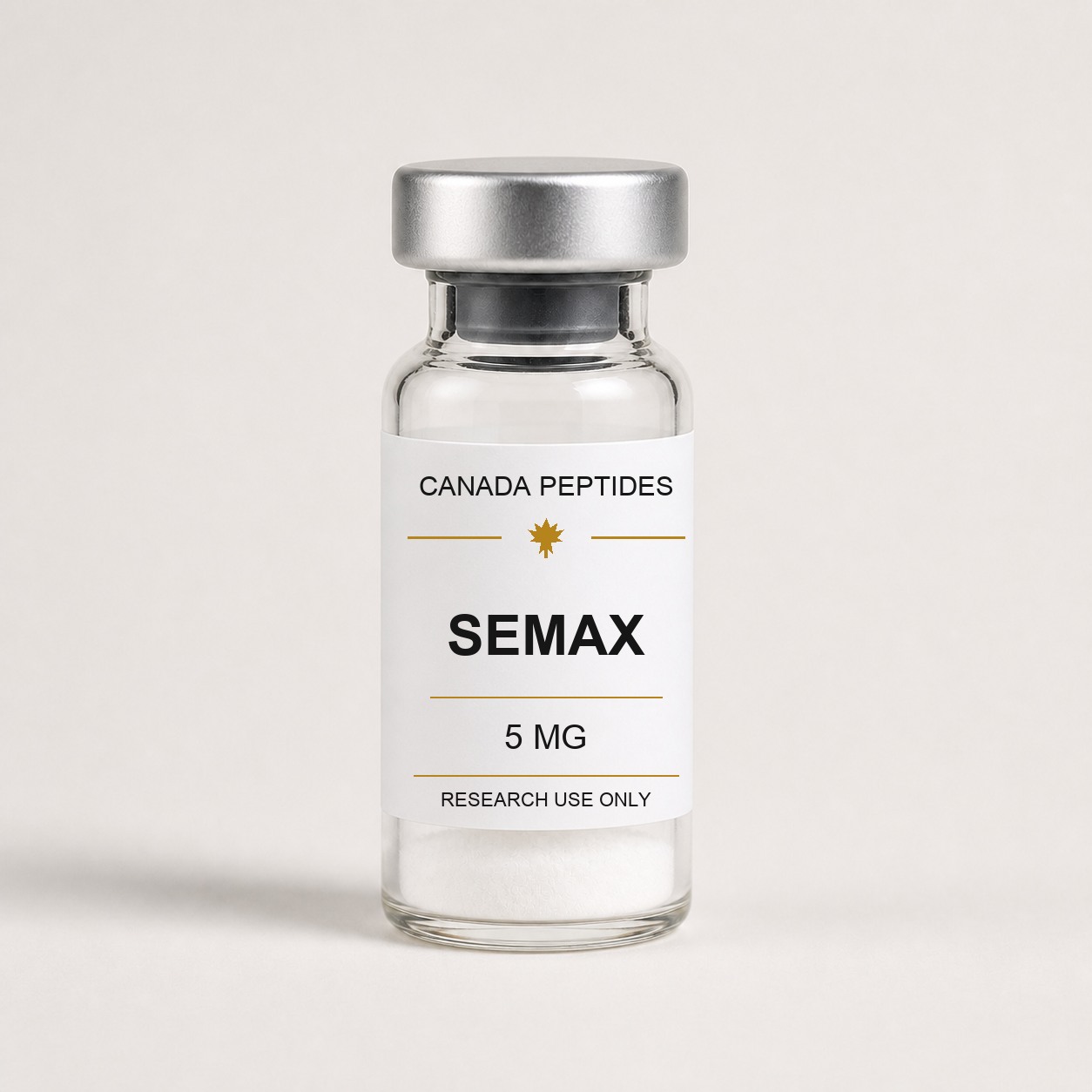
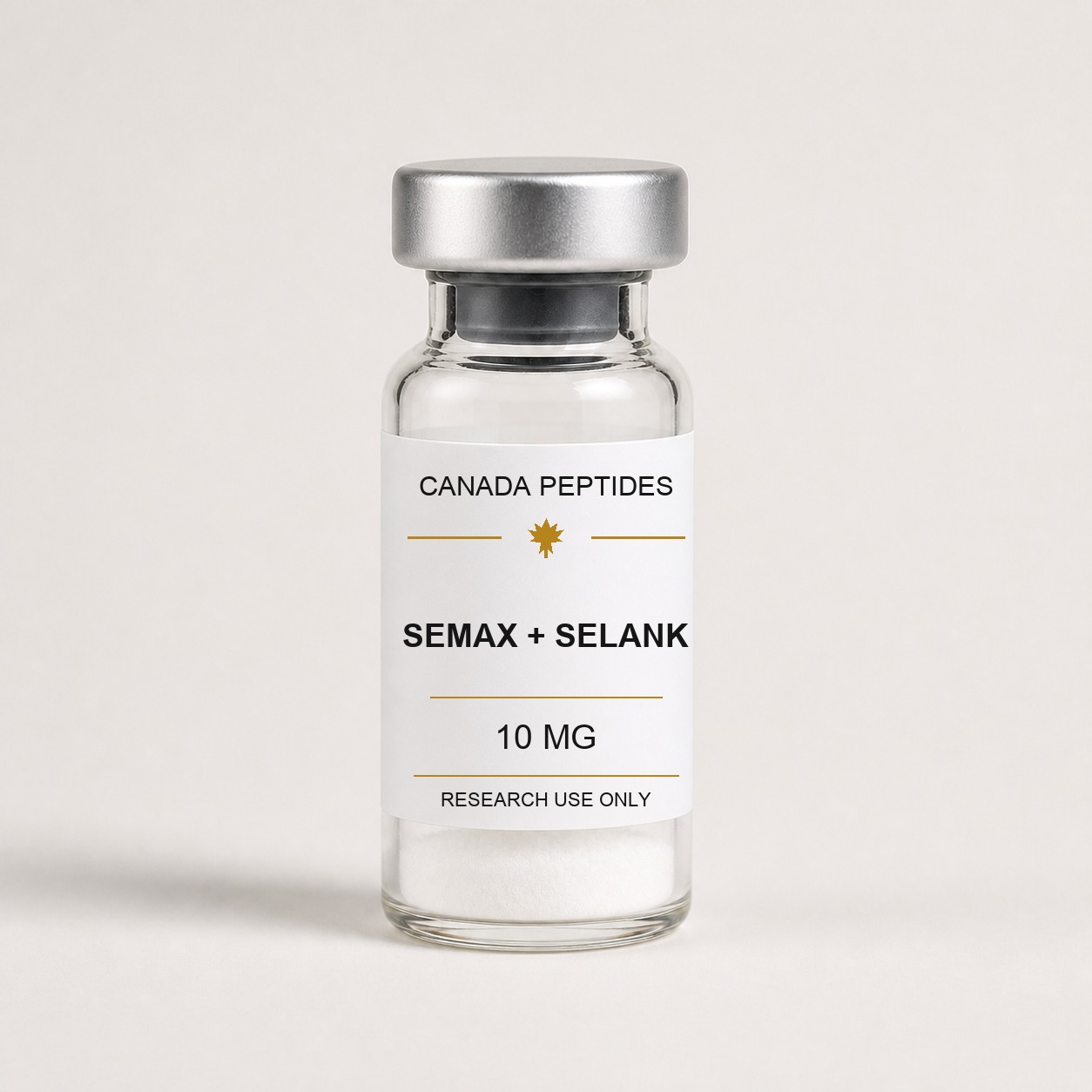
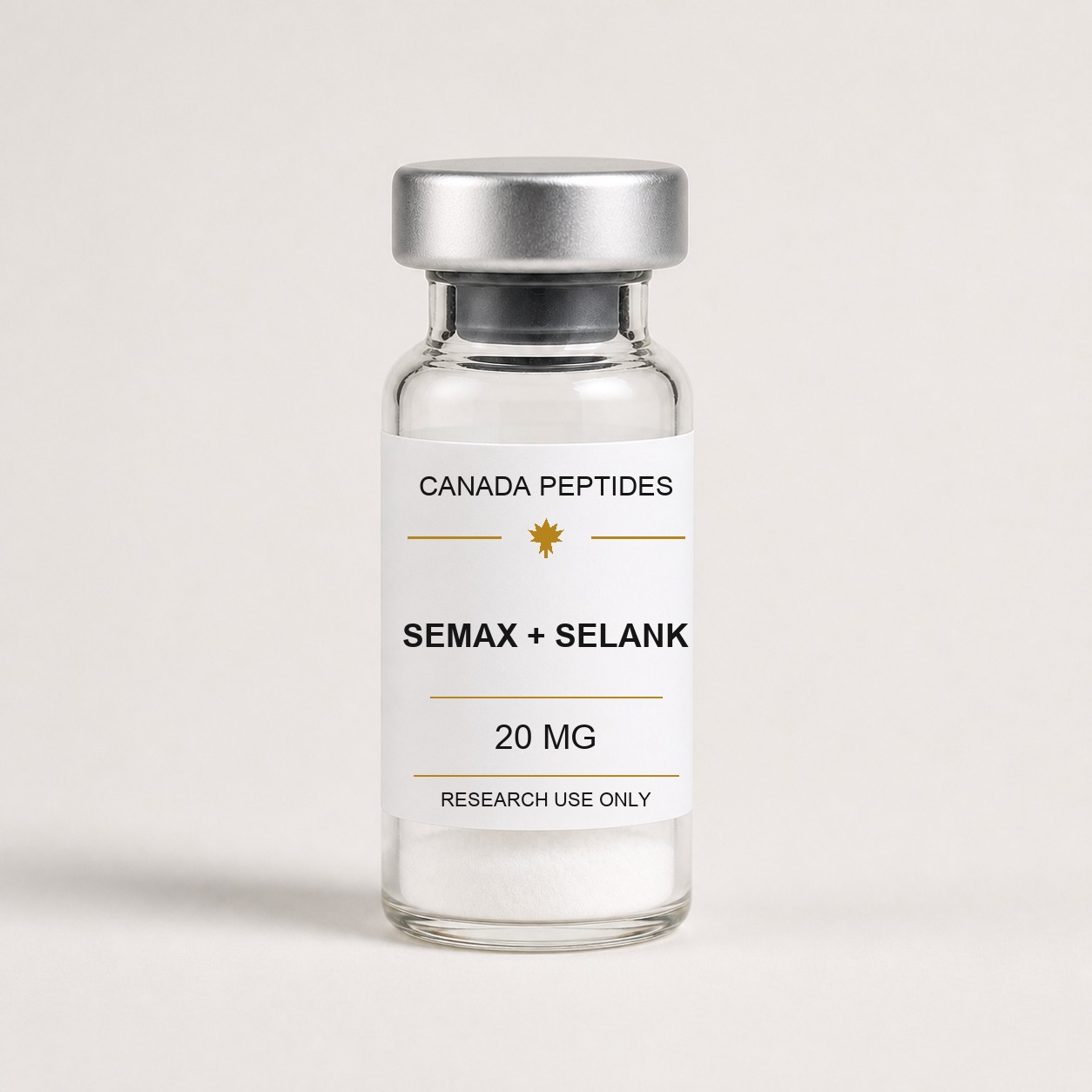
Semax is most commonly handled as a lyophilized powder for reconstitution and intranasal use in research settings. It is frequently studied alongside Selank, an anxiolytic peptide with a complementary profile — the rationale being daytime cognitive load paired with anxiolytic tone. NeuroForge carries Semax on its own and as Semax + Selank blends for stacked protocols.
Frequently asked questions
What is Semax?
Semax is a synthetic heptapeptide derived from the ACTH 4-10 fragment and stabilized with a Pro-Gly-Pro extension. It is studied as a nootropic and neuroprotective research peptide.
How does Semax work?
Its most-cited mechanism is upregulation of the neurotrophins BDNF and NGF and their receptors, alongside interaction with central melanocortin receptors and modulation of dopamine and serotonin signalling. The neurotrophic changes outlast its short plasma half-life.
Why do Semax effects outlast its half-life?
Semax clears from plasma within roughly half an hour, but it acts by switching on neurotrophic gene expression. Once BDNF and NGF are upregulated, their downstream effects on neurons continue for hours to days.
Is the research on Semax strong?
The mechanistic research is well supported, but most clinical and preclinical work originates in Russia and large independent randomized trials are limited. It is best viewed as mechanistically grounded with an incomplete Western clinical dataset.
How is Semax administered in research?
It is typically reconstituted from lyophilized powder and given intranasally, and is often paired with Selank for a combined cognitive and anxiolytic profile.