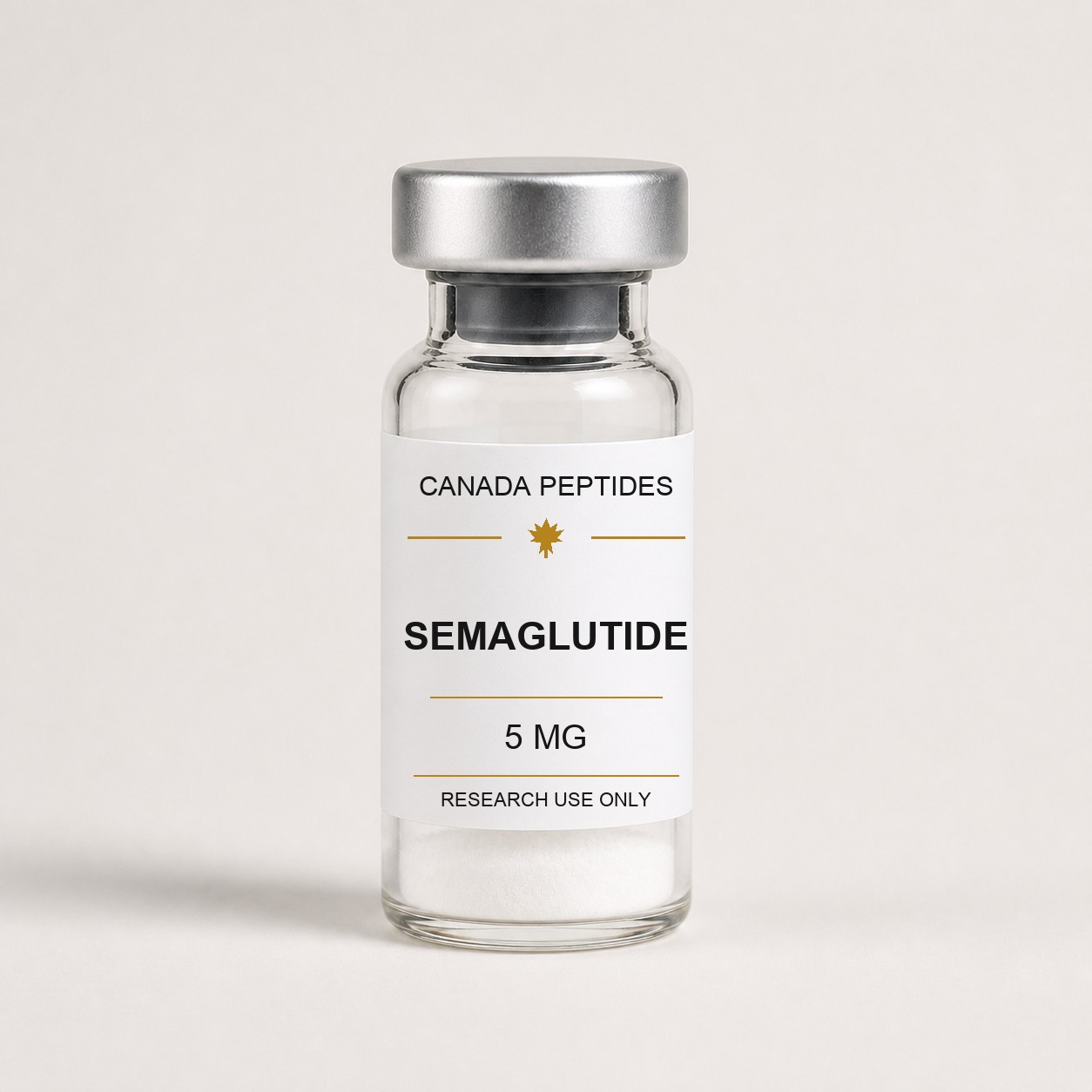
Semaglutide is a titrated compound — the amount used in research is raised gradually rather than held fixed. This reference summarises how it is administered in the literature and links the handling math. It is research context only, not a dosing recommendation for human use. For the compound and where to buy it in Canada, see the Semaglutide hub.
Once-weekly, titrated
Published semaglutide protocols use once-weekly subcutaneous administration with gradual dose escalation — starting low and stepping up over weeks. Slow titration is standard across the GLP-1 receptor-agonist class and is how tolerability is managed in the literature. Exact schedules vary by study.
Reconstitution and dosing math
Research-grade semaglutide ships lyophilised and is reconstituted with bacteriostatic water before use. The volume drawn for a given amount depends on your reconstitution concentration — a units-and-concentration calculation, not a fixed number. Work it through with the dosing-math guide and reconstitution walkthrough.
Frequently asked questions
How often is semaglutide dosed in research?
Published protocols use once-weekly subcutaneous administration.
Does semaglutide use a fixed dose?
No — protocols titrate upward from a low starting amount over several weeks.
How do I calculate a draw volume?
It depends on your reconstitution concentration; use the dosing-math and reconstitution guides. This article does not provide a human dosing recommendation.
Is this medical advice?
No. Research-grade semaglutide is supplied for research use only; nothing here is medical advice.