April 14, 2026·5 min read·glp-1, gip, glucagon, metabolic, compound-overview
Retatrutide — a research overview
Triple GIP/GLP-1/glucagon receptor agonist in phase 3 development with emerging data on metabolic effects beyond appetite suppression.
Triple GIP/GLP-1/glucagon receptor agonist in phase 3 development with emerging data on metabolic effects beyond appetite suppression.
Retatrutide extends the receptor axis one step further: GIP, GLP-1, and glucagon receptors on a single backbone. This is the first triple agonist to reach Phase 3 human development, and the addition of glucagon is the mechanistic bet that separates it from Tirzepatide. For decades, glucagon has occupied an awkward space in endocrinology — necessary for survival, but historically framed as the "bad hormone" because pharmacologic excess drives hyperglycemia and muscle loss. Retatrutide reverses this logic: chronic, low-dose glucagon receptor activation may drive energy expenditure through mechanisms distinct from appetite suppression, potentially additive to the GIP and GLP-1 arms.
Retatrutide is a 34-amino-acid synthetic peptide engineered for simultaneous agonism across three distinct G-protein coupled receptors. The glucagon receptor novelty is the key. While GIP and GLP-1 primarily drive appetite suppression and glucose handling, glucagon's classical role centers on catabolic energy mobilization — increasing hepatic glucose output, driving lipolysis, and modulating energy expenditure through brown adipose tissue. The hypothesis is that low-dose chronic glucagon signaling amplifies the metabolic response beyond what dual agonism alone can achieve. This is testable in human data, and the TRIUMPH Phase 2 program was designed to measure it.
The half-life and absorption kinetics of Retatrutide are still being formally characterized in the published literature — the molecule is younger than Tirzepatide and Semaglutide as a clinical asset. Phase 2 and Phase 3 protocols suggest once-weekly subcutaneous dosing similar to the other long-acting GLP-1 class members, but the precise half-life window and steady-state timeline have not been published in detail yet. This is a practical difference from Semaglutide and Tirzepatide, where those parameters are well-established: users running Retatrutide are working with slightly newer pharmacokinetic ground.
TRIUMPH, the Phase 2 proof-of-concept trial, examined multiple dose escalations up to 12 mg weekly over 48 weeks in adults without diabetes. The reported weight reduction at the 12 mg dose was approximately 24% placebo-adjusted — slightly larger in magnitude than Tirzepatide's SURMOUNT-1 at 20.9%. Interpreting this requires care: different trials, different cohorts, different timelines. The dose-response curve characterization is less mature than what exists for Semaglutide and Tirzepatide, so claims of "superiority" rest on statistical noise rather than clear biological daylight.
Retatrutide's human dataset is the shortest of the three major GLP-1 axis compounds discussed in the NeuroForge catalog. TRIUMPH is the primary efficacy dataset; Phase 3 programs are ongoing as of 2026. The safety characterization is still being refined, particularly around the glucagon arm. Semaglutide has 7+ years of post-marketing human use; Tirzepatide has 18+ months; Retatrutide has approximately 12 months of Phase 2 data. This doesn't mean Retatrutide is unsafe — it means the side-effect profile, rare event rates, and long-term tolerability are newer territory.
Cross-trial numbers are not head-to-head — different cohorts, endpoints, and durations — but the receptor pharmacology and data maturity line up clearly:
| Semaglutide | Tirzepatide | Retatrutide | |
|---|---|---|---|
| Receptor targets | GLP-1 | GIP + GLP-1 | GIP + GLP-1 + glucagon |
| Class | Single agonist | Dual agonist | Triple agonist |
| Peak trial weight reduction | ~15% (STEP) | ~20.9% (SURMOUNT-1) | ~24% (TRIUMPH Phase 2, 12 mg) |
| Human-data maturity | 7+ years post-market | ~18+ months | ~12 months Phase 2 |
| Stage | Approved | Approved | Phase 3 |
For the full breakdowns see the Semaglutide and Tirzepatide overviews, or the GLP-1 receptor agonists compared guide.
Glucagon receptor activation at low chronic doses is mechanistically novel enough that early-phase users should expect variable GI tolerability compared to dual agonists. Earlier triagonist candidates — compounds like Cotadutide, which combined GLP-1, GIP, and glucagon agonism — had development halted partly due to tolerability issues that exceeded the benefits. Retatrutide's design attempts to address those failures, but the principle remains: adding a third receptor arm adds complexity.
The metabolic hypothesis — that glucagon drives additional energy expenditure — is compelling on paper but has not yet been cleanly isolated in human data. The TRIUMPH trial reports total weight reduction, not a parsed breakdown of appetite suppression vs. metabolic rate elevation. Parsing that separation will likely be the focus of later trials or mechanistic substudies.
Dose titration protocols are still being refined. Unlike Semaglutide and Tirzepatide, which have locked-in titration schedules from large Phase 3 programs, Retatrutide's optimal ramp-up strategy may shift as Phase 3 data accumulate.
Retatrutide (Retatrutide/009) is the frontier entry in the GLP-1 axis. Users choosing this compound are betting that the mechanistic novelty (glucagon agonism) and early TRIUMPH data justify the shallower human dataset relative to Semaglutide and Tirzepatide. It pairs well with users interested in understanding the next-generation metabolic tools, or those seeking evidence beyond appetite suppression alone.
What makes retatrutide different from tirzepatide? Retatrutide adds a third receptor arm: glucagon. Where tirzepatide is a dual GIP/GLP-1 agonist, retatrutide targets GIP/GLP-1/glucagon, hypothesized to amplify energy expenditure through an additional metabolic pathway.
How much weight reduction does retatrutide show? In the TRIUMPH Phase 2 trial, approximately 24% placebo-adjusted weight reduction at 12 mg weekly over 48 weeks in non-diabetic adults—modestly larger than tirzepatide's SURMOUNT-1 at 20.9%, though trial designs differ.
Why is retatrutide's data less extensive than semaglutide? Retatrutide is the newest compound of the three major GLP-1 agents. Semaglutide has 7+ years of post-marketing data, tirzepatide has 18+ months, while retatrutide has approximately 12 months of Phase 2 data from TRIUMPH.
What are the safety concerns with glucagon receptor activation? Earlier triagonist candidates were halted partly due to gastrointestinal tolerability exceeding benefits. Retatrutide's design attempts to address those failures, but adding a third receptor arm increases complexity compared to dual agonism.
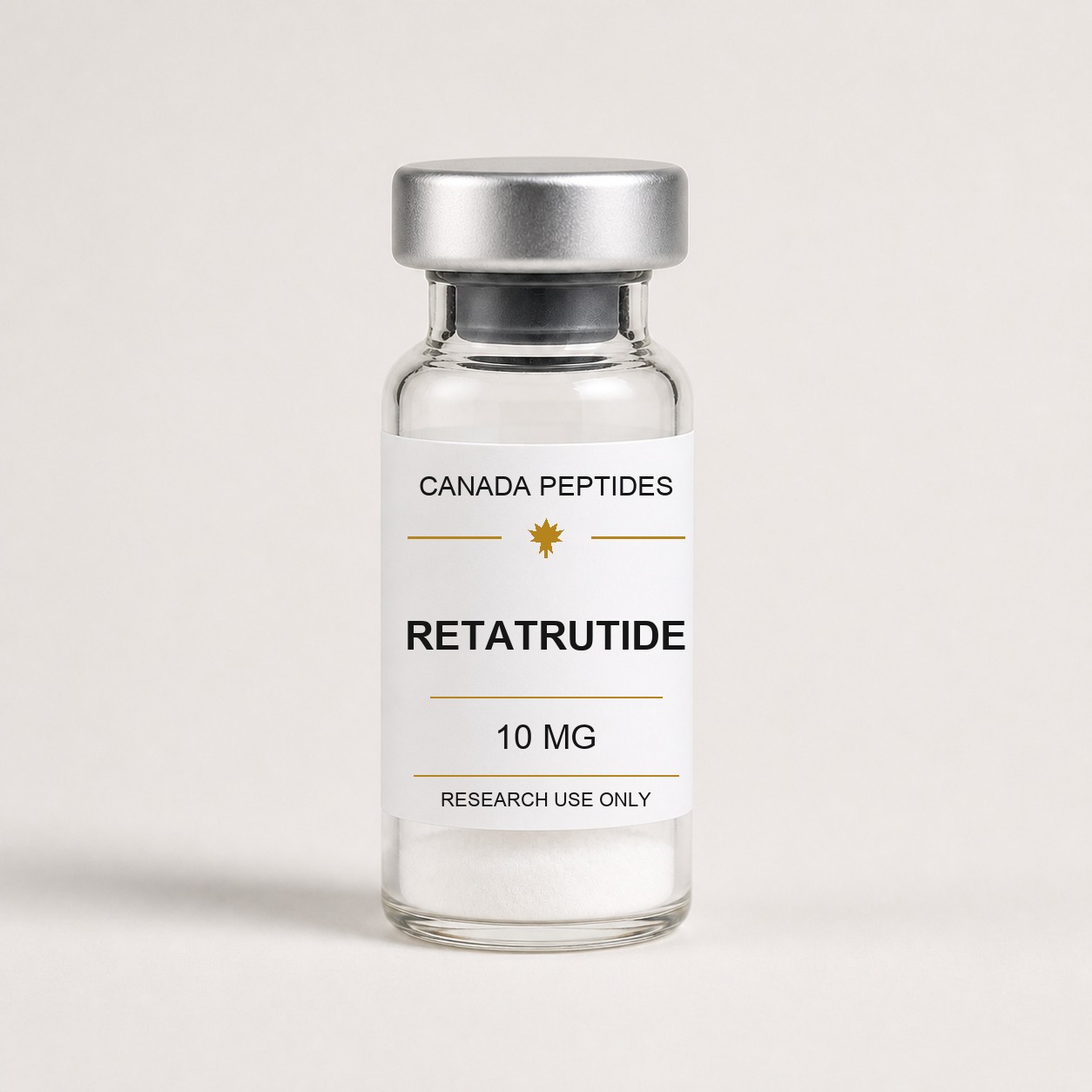
Is retatrutide approved by the FDA? No. As of 2026, retatrutide is in Phase 3 development; regulatory approval remains pending. It is sold for research use only.