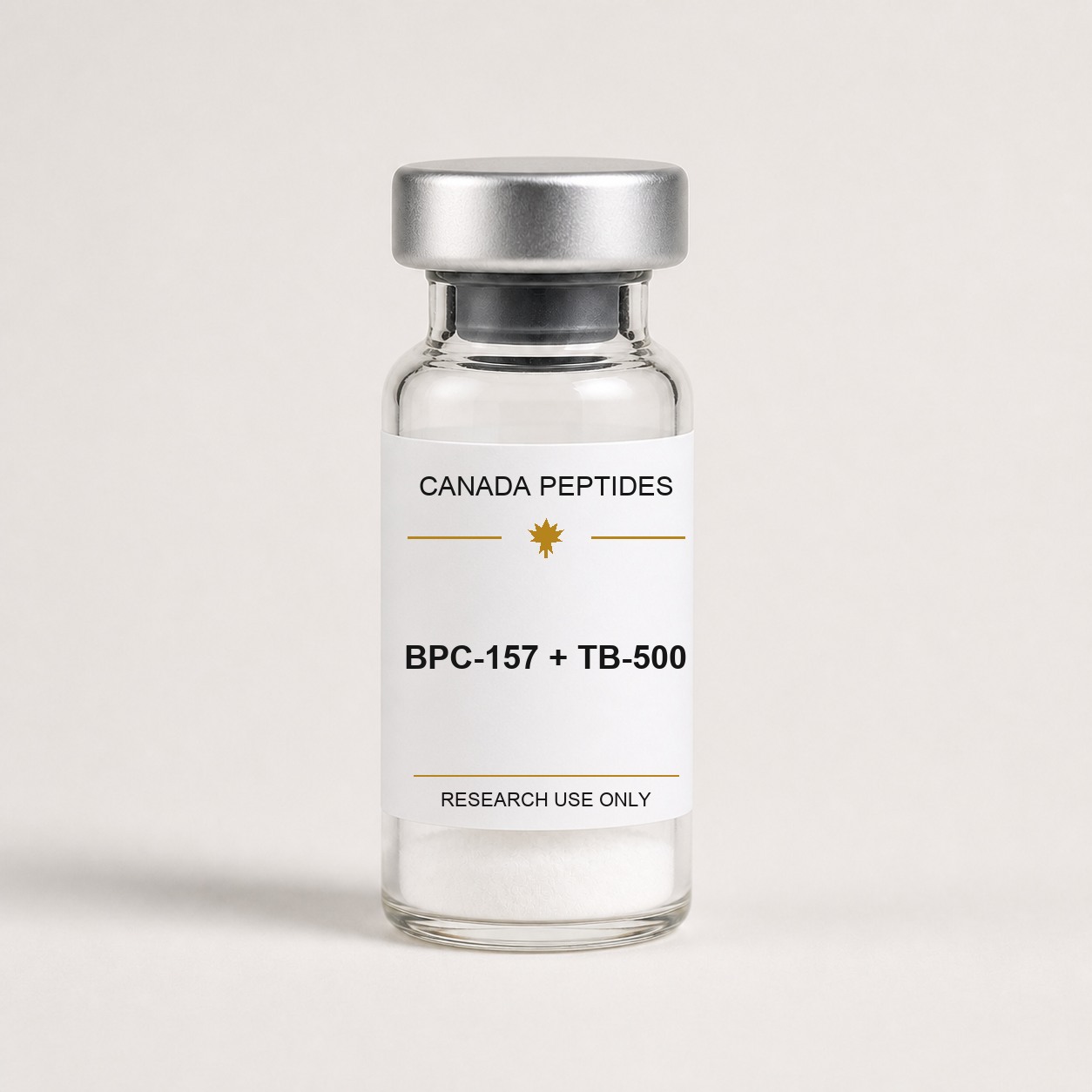
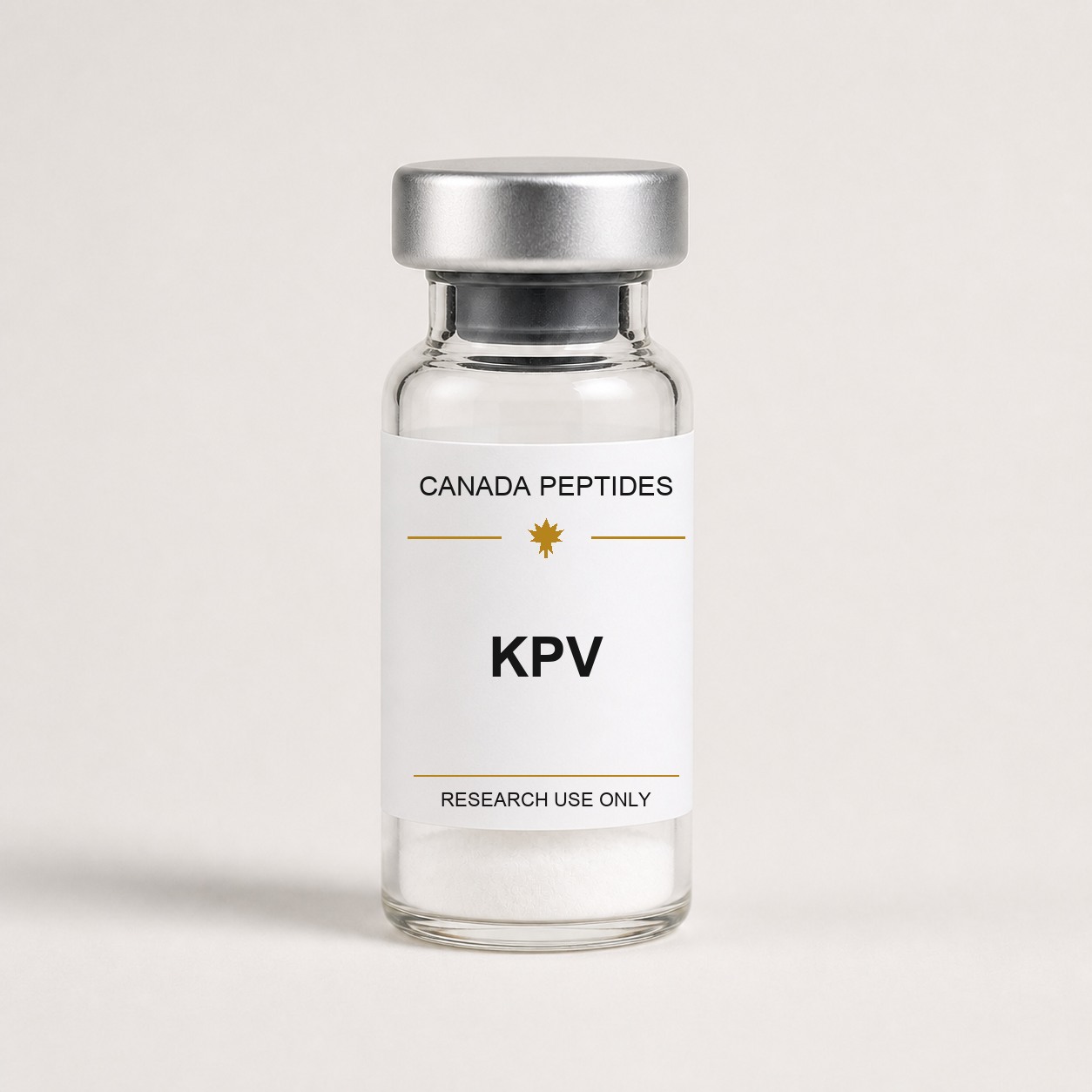
The recovery domain is driven by two complementary mechanisms:
angiogenesis/tissue-repair signaling (BPC-157 and TB-500) and
anti-inflammatory modulation (KPV). Together they address both the
structural side of healing — blood vessel formation, fibroblast migration,
collagen deposition — and the systemic side — quieting the inflammatory
cascade that slows repair.
This stack is designed for active injury recovery, post-surgical healing,
or athletes in high-volume training blocks. Typical run length: 4–8 weeks.
Primary compound — BPC-157 + TB-500 blend
BPC-157 + TB-500 combines two of
the most-studied regenerative peptides into a single vial. BPC-157 is the
gastric-derived pentadecapeptide with the strongest literature for tendon,
ligament, and GI healing. TB-500 (thymosin beta-4 fragment) accelerates
cell migration to injury sites and is associated with angiogenesis.
The blend reduces injection frequency (one subq dose vs. two separate
ones) without changing pharmacokinetics meaningfully.
Adjunct — KPV
KPV is the C-terminal tripeptide of
alpha-MSH with no melanocortin activity but significant
anti-inflammatory signaling. It acts downstream of the inflammatory
cascade, which means it complements rather than competes with the
BPC/TB-500 pair. Daily subcutaneous dosing during the acute phase.
Proposed dosing window
Compound
Frequency
Published range
BPC-157 + TB-500 blend
Daily (subq, site of injury)
500 mcg
KPV
Daily
500 mcg – 1 mg
For tendon or ligament injuries, local subq injection near the injury site
(not into the joint) is the published approach. For systemic recovery
(post-surgical, overtraining), abdominal subq rotation is standard.
Endpoints to measure
Pain scale at injury site (0–10, daily)
Range of motion (measured weekly with a standard protractor or app)
Subjective recovery between training sessions (1–10 scale)
Sleep quality (from a wearable)
C-reactive protein, if blood work is available (monthly)
When to stop
Published cycle lengths for BPC-157 and TB-500 are typically 4–6 weeks
for an acute injury, with a 4+ week break before re-running. Continuous
multi-month use isn't well-characterized in the literature. KPV has a
cleaner continuous-use profile but most users taper after 6–8 weeks.