August 20, 2026·5 min read·AOD-9604, hGH fragment 176-191, metabolic, lipolysis, research overview
AOD-9604 — a research overview
A research overview of the AOD-9604 peptide: the hGH 177-191 fragment, its proposed β3-adrenergic lipolysis mechanism, what the Phase 2a and Phase 2b human trials actually returned, and its regulatory status.
AOD-9604 is one of the few research peptides with a genuine pharmaceutical paper trail — a full clinical development program, a defined primary endpoint, and a documented failure to meet it. That history makes it unusually easy to describe honestly, and unusually easy to oversell. This overview covers the sequence, the mechanism the developers proposed, what the human trials actually returned, and where the compound sits today.
Sequence and design rationale
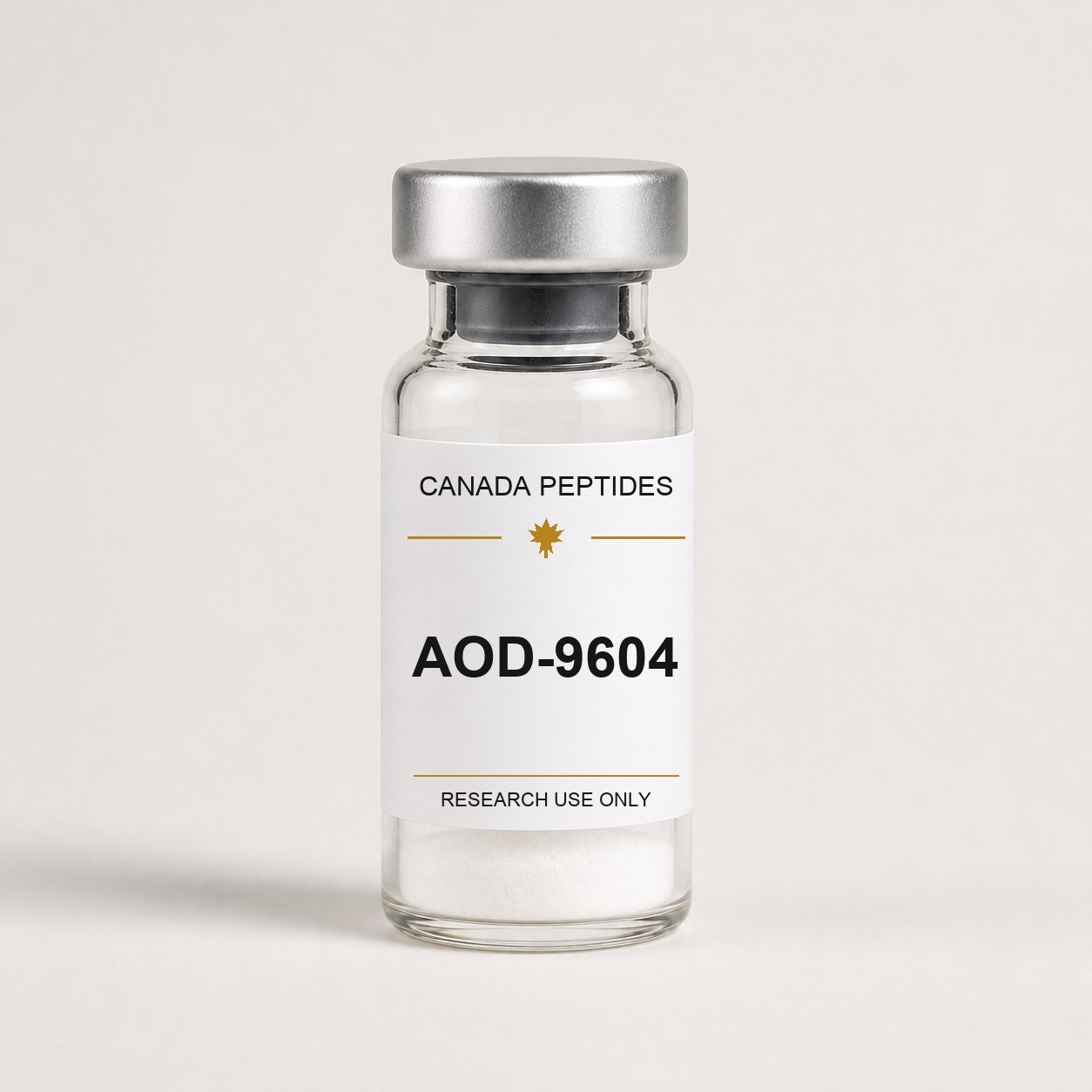
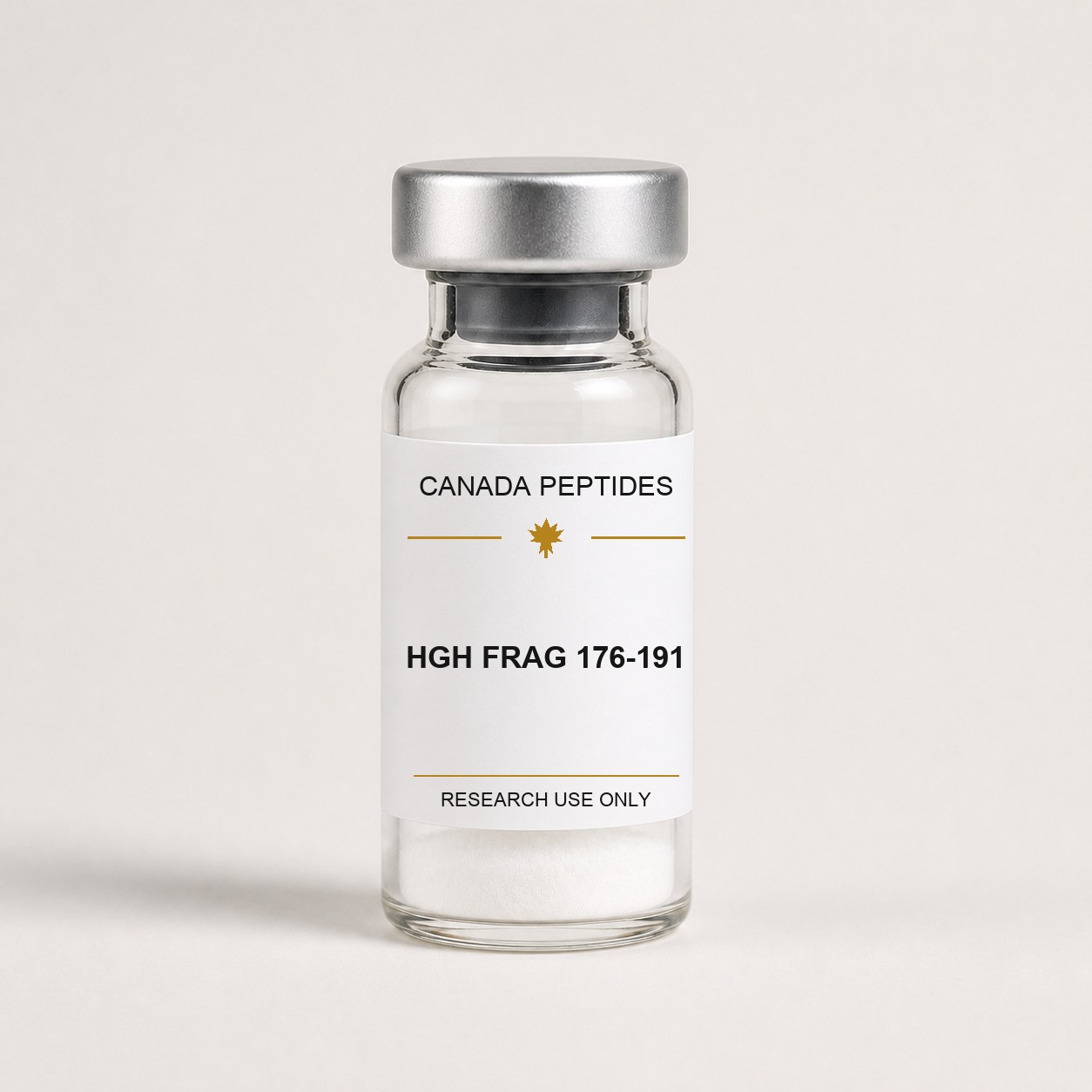
AOD-9604 is a 16-residue synthetic peptide corresponding to the C-terminal region of human growth hormone — residues 177–191 — with an N-terminal tyrosine added for stability. Catalogue listings frequently label the same molecule "hGH Fragment 176-191"; the numbering convention differs, the molecule does not. The two names and their sourcing history are covered separately in AOD-9604 vs HGH Fragment 176-191.
The design premise came out of work at Monash University and was commercialised by the Australian company Metabolic Pharmaceuticals. Full-length growth hormone mobilises fat, but it also raises IGF-1, impairs glucose tolerance, and drives tissue growth — the reasons hGH was never viable as a long-term obesity therapy. The hypothesis behind AOD-9604 was that the lipolytic signal sits in the C-terminal fragment and can be separated from growth-hormone-receptor-mediated effects. Whether that separation is clinically useful is a different question from whether it exists.
Proposed mechanism
The mechanistic literature describes AOD-9604 acting on adipocytes rather than through the growth hormone receptor: increased lipolysis via hormone-sensitive lipase, and reduced lipogenesis, without a corresponding rise in IGF-1. The strongest single piece of mechanistic evidence is genetic. Heffernan and colleagues, reporting in Endocrinology in 2001, found that chronic AOD-9604 treatment in obese mice reduced body weight and altered lipid metabolism, and that these effects were absent in β3-adrenoceptor knockout mice — implicating β3-adrenergic signalling as a required node in the pathway.
That is a clean knockout result, and it is a mouse result. The receptor biology of β3-adrenoceptors differs meaningfully between rodents and humans, which is a recurring reason rodent lipolysis findings have translated poorly. The mechanism is plausible and specified; it is not the same as demonstrated human efficacy.
What the human trials returned
The clinical program ran through Phase 1 and Phase 2, and — this matters more than it is usually acknowledged — used oral administration throughout.
A 12-week Phase 2a trial in roughly 300 subjects with obesity, reported by the company in late 2004, found the 1 mg once-daily arm losing on the order of 2.6–2.8 kg versus about 0.8 kg on placebo. Encouraging, modest, and never published as a primary report in the peer-reviewed literature — the figures circulate from company announcements and secondary coverage.
The confirmatory study did not replicate it. A 24-week Phase 2b trial in 536 subjects, testing 0.25 mg, 0.5 mg, and 1 mg daily against placebo, failed to separate from placebo on the primary weight-loss endpoint. Development was terminated in 2007. The Phase 2b primary publication never appeared in a peer-reviewed journal, which means the most informative trial in the entire program is also the least accessible one.
The safety picture is better documented than the efficacy picture. Stier, Vos and Kenley (Journal of Endocrinology and Metabolism, 2013) pooled six randomised, double-blind, placebo-controlled trials and reported tolerability indistinguishable from placebo, no effect on serum IGF-1, no adverse effect on carbohydrate metabolism on oral glucose tolerance testing, and no detectable anti-AOD9604 antibodies. The separation-from-hGH hypothesis, in other words, held up on the safety side. It was efficacy that did not.
The joint-tissue line of research
A second research thread looked at intra-articular use. A 2015 study in Annals of Clinical and Laboratory Science used a collagenase-induced knee osteoarthritis model in 32 rabbits, comparing saline, hyaluronic acid, AOD9604, and AOD9604 plus HA at weekly 0.25 mg injections. The combination group scored best on gross morphology and modified Mankin histopathology and recovered from lameness fastest. The authors were explicit about small sample size and limited generalisability. AOD-9604 was later nominated to the FDA's 503A bulk drug substances list partly for osteoarthritis and osteoporosis uses; that thread has not produced controlled human data.
Regulatory position
Three separate statuses get conflated in marketing copy, so they are worth stating individually. AOD-9604 has never been approved as a drug by any regulator. It was self-affirmed GRAS by an industry expert panel for limited food-ingredient use — a designation about food safety, not therapeutic approval. It was placed in Category 2 of the FDA's interim 503A bulks list in 2023 and removed in September 2024 after the nominator withdrew the nomination, which resolves nothing about safety either way. And it is prohibited in sport under WADA Section S2 as a growth hormone fragment.
Where it sits
Against the incretin class, the comparison is not close on evidence weight — see GLP-1 receptor agonists compared for compounds with large, published, endpoint-hitting trials. AOD-9604's interest to researchers is mechanistic: a receptor-selective probe of GH-independent lipolysis with a well-characterised human safety profile and a negative efficacy trial behind it.
One caveat deserves emphasis for anyone reading the literature: every human dataset above used oral dosing. Research-market material like AOD-9604 and hGH Fragment 176-191 ships lyophilised for reconstitution and parenteral laboratory use. Route changes exposure profile, and the published human data do not transfer across that gap.
Frequently asked questions
Is AOD-9604 the same as hGH Fragment 176-191?
Functionally yes — the same 16-residue tyrosine-modified C-terminal hGH fragment under two naming conventions. Differences between vials are matters of synthesis quality and purity, not molecular identity.
Did AOD-9604 work for weight loss in humans?
A 12-week Phase 2a trial reported a modest oral-dose advantage over placebo. The larger 24-week Phase 2b trial in 536 subjects did not reach its primary weight-loss endpoint, and development stopped in 2007.
Does AOD-9604 raise IGF-1?
Pooled data from six placebo-controlled trials reported no effect on serum IGF-1 and no adverse effect on carbohydrate metabolism, which was the central hypothesis the fragment was designed to test.
Why did AOD-9604 come off the FDA's Category 2 list in 2024?
Because the party that nominated it withdrew the nomination, not because FDA reached a favourable safety determination. Removal on withdrawal is an administrative outcome, not an endorsement.
Is AOD-9604 permitted in competitive sport?
No. It is listed under WADA Section S2 as a growth hormone fragment and is prohibited at all times.