August 13, 2026·6 min read·semaglutide, tirzepatide, GLP-1, GIP, comparison, incretin
Semaglutide vs Tirzepatide — compared
Semaglutide vs tirzepatide compared on mechanism, half-life, and the head-to-head trial data from SURPASS-2 and SURMOUNT-5 — including where the cardiovascular evidence still diverges.
Semaglutide and tirzepatide are the two most heavily studied incretin agonists in the current literature, and they are routinely discussed as if they were interchangeable. They are not. One engages a single receptor; the other engages two — and unusually for this field, the two have been compared directly, twice, in adequately powered randomized trials.
The mechanistic difference
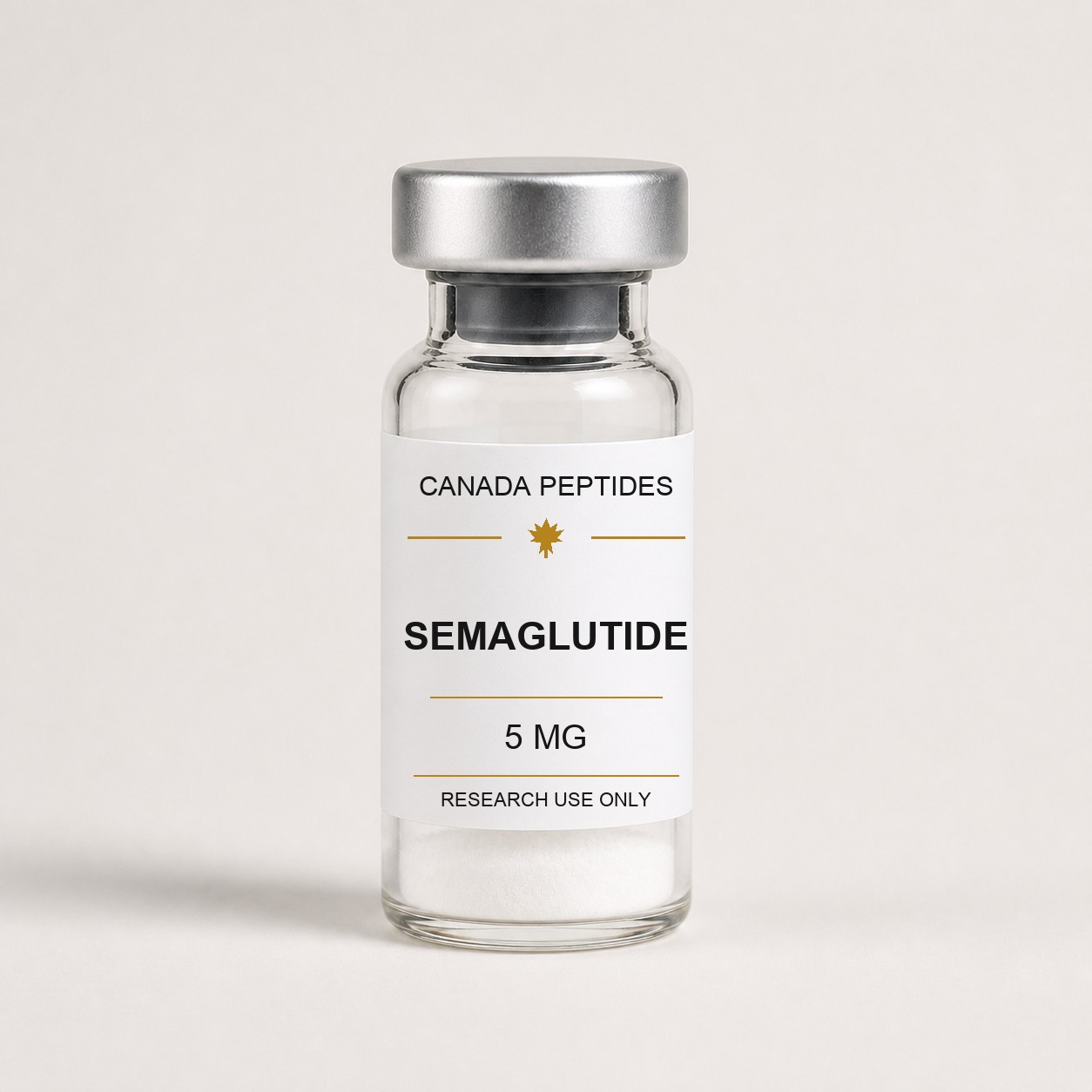
Semaglutide is an acylated GLP-1 analogue. Its backbone is a modified human GLP-1 sequence, stabilized against dipeptidyl peptidase-4 (DPP-4) cleavage and fitted with a C18 fatty-diacid side chain that binds reversibly to serum albumin. It acts at one target: the GLP-1 receptor.
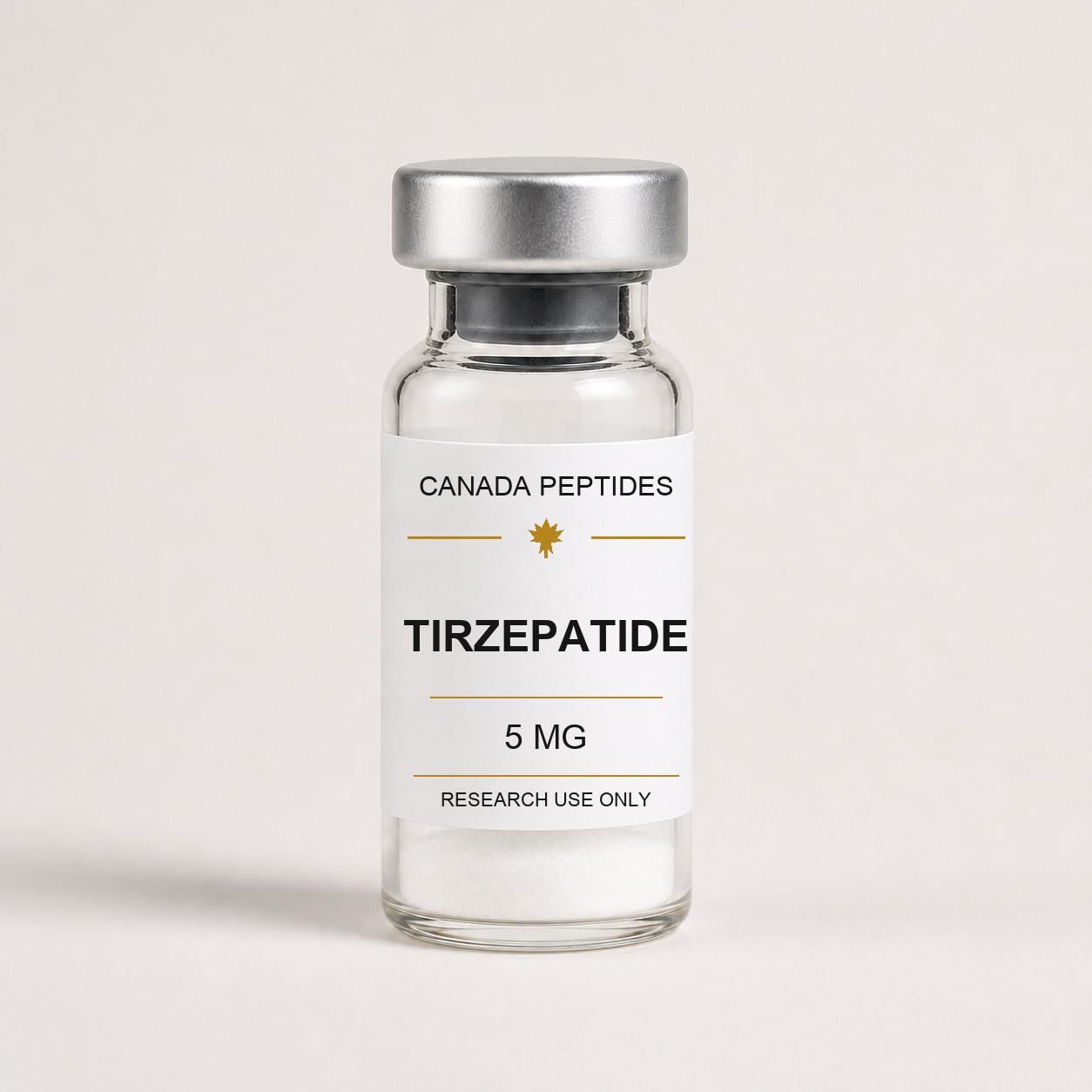
Tirzepatide is a 39-residue synthetic peptide built on the native glucose-dependent insulinotropic polypeptide (GIP) scaffold, carrying a C20 fatty-diacid chain and the same albumin-binding strategy. It is a dual agonist — active at both the GIP and GLP-1 receptors, with an imbalanced profile: high potency at GIP-R and comparatively weaker, biased signalling at GLP-1R.
The GIP arm is the genuinely unsettled part. Whether GIP-receptor agonism contributes an independent effect on adiposity, improves gastrointestinal tolerability at equivalent GLP-1 exposure, or does some of both, is still argued in the literature. The clinical separation is well documented; the mechanistic attribution is not.
Side by side
Semaglutide
Tirzepatide
Class
GLP-1 receptor agonist
Dual GIP/GLP-1 receptor agonist
Structure
Acylated GLP-1 analogue, C18 diacid
39-residue GIP-based peptide, C20 diacid
Elimination half-life
~1 week (≈160 h)
~5 days (≈120 h)
Steady state
~4–5 weeks of weekly dosing
~4 weeks of weekly dosing
Head-to-head weight (SURMOUNT-5, 72 wk)
−13.7%
−20.2%
Head-to-head HbA1c (SURPASS-2, 40 wk)
−1.86% (1 mg)
−2.01% to −2.30% (5/10/15 mg)
Placebo-controlled CV outcome data
SELECT: MACE HR 0.80 vs placebo
None; SURPASS-CVOT used an active comparator
GI-driven discontinuation (SURMOUNT-5)
5.6%
2.7%
Data maturity
Longer record, oral and injectable forms
Newer, large trials but shorter follow-up
What the head-to-head trials actually showed
SURPASS-2 (2021) randomized 1,879 adults with type 2 diabetes on metformin to tirzepatide 5, 10, or 15 mg or semaglutide 1 mg for 40 weeks. HbA1c fell 2.01%, 2.24%, and 2.30% across the tirzepatide arms versus 1.86% with semaglutide. Weight fell 13.1% (12.4 kg) at tirzepatide 15 mg versus 6.7% (6.2 kg) with semaglutide. The obvious limitation: the comparator was semaglutide 1 mg, a glycemic dose, not the 2.4 mg dose later studied for weight. That design choice inflates the weight-loss gap.
SURMOUNT-5 (2025, NEJM) closed that gap. It randomized 751 adults with obesity and without type 2 diabetes to maximum tolerated doses of either compound for 72 weeks. Mean weight reduction was 20.2% with tirzepatide versus 13.7% with semaglutide (p<0.001) — roughly 47% more mean weight loss, this time against a fair comparator dose. Tirzepatide also produced larger improvements in systolic and diastolic blood pressure, HbA1c, fasting insulin, triglycerides, and HDL cholesterol.
Both trials were open-label and sponsor-funded by the manufacturer of tirzepatide. SURMOUNT-5 enrolled 751 participants — adequate for the primary endpoint, modest for anything rarer. Neither trial was designed to detect differences in hard outcomes.
Where the evidence diverges outside body weight
This is the part that gets flattened in most comparisons. Semaglutide has placebo-controlled cardiovascular outcome data that tirzepatide does not. SELECT (NEJM, 2023) randomized 17,604 adults with established cardiovascular disease and overweight or obesity, without diabetes, to semaglutide 2.4 mg or placebo: major adverse cardiovascular events occurred in 6.5% versus 8.0%, a hazard ratio of 0.80.
Tirzepatide's cardiovascular program, SURPASS-CVOT, enrolled over 13,000 participants with type 2 diabetes and atherosclerotic disease over more than 4.5 years — but against an active comparator, dulaglutide, not placebo. It met non-inferiority, with roughly 8% fewer MACE-3 events and about 16% lower all-cause mortality than dulaglutide, alongside larger metabolic improvements. That is a real result, and it is a different question than the one SELECT answered. Larger weight loss is not automatically transitive to better outcomes, and the trials that would settle it are still maturing.
Tolerability
For both compounds the adverse-event profile is dominated by gastrointestinal effects — nausea, vomiting, diarrhea, constipation — concentrated in the dose-escalation phase and mostly mild to moderate. In SURMOUNT-5, discontinuation specifically attributable to gastrointestinal events was 2.7% on tirzepatide versus 5.6% on semaglutide, while overall discontinuation for adverse events was comparable between arms. The reasonable reading is that the primary differentiator between these two is efficacy, not safety.
How to think about the difference
Framed as a literature question rather than a recommendation: tirzepatide has the stronger head-to-head data on weight and glycemic endpoints, plus a modest tolerability edge during escalation. Semaglutide has the longer clinical record, more formulations, and the only placebo-controlled cardiovascular outcome result of the two. Published study designs reflect that split — weight and metabolic-endpoint work increasingly uses tirzepatide, while cardiovascular and long-horizon work still leans on semaglutide, because that is where the outcome data sits.
Frequently asked questions
Is tirzepatide simply a stronger version of semaglutide?
No. They are structurally distinct peptides with different receptor targets — semaglutide at GLP-1 only, tirzepatide at both GIP and GLP-1. The head-to-head data show larger effect sizes for tirzepatide on weight and HbA1c, but "stronger" understates that these are different pharmacological agents, not two doses of one thing.
Which has better cardiovascular data?
Semaglutide, in the specific sense that matters: SELECT was placebo-controlled and showed a 20% relative reduction in major adverse cardiovascular events. Tirzepatide's SURPASS-CVOT was an active-comparator trial against dulaglutide and demonstrated non-inferiority with favourable secondary metabolic results. The two answer different questions.
Do they have the same half-life?
Close but not identical. Semaglutide's elimination half-life is roughly one week (≈160 hours); tirzepatide's is approximately five days (≈120 hours). Both bind albumin via a fatty-diacid side chain, which is what supports weekly administration in the published protocols, and both reach steady state after about four to five weeks of weekly dosing.
Why were the head-to-head trials open-label?
Both were open-label, largely because the two compounds use different titration schedules and delivery presentations that are difficult to mask. It is a genuine limitation — open-label design is more vulnerable to expectancy effects on tolerability reporting and on behavioural co-interventions — and it should temper how firmly the effect sizes are read.