September 23, 2026·6 min read·melanotan-2, dosage, melanocortin, alpha-msh analogue, peptide research, canada
Melanotan II dosage — research dosing notes
What the University of Arizona studies report about Melanotan II dosage: 0.01–0.03 mg/kg subcutaneous in the 1990s trials, the ~1-hour half-life, and the reconstitution arithmetic for a 10 mg vial.
Melanotan II is a synthetic cyclic heptapeptide analogue of α-melanocyte-stimulating hormone, designed at the University of Arizona in the late 1980s to stimulate skin pigment without ultraviolet light. It is a non-selective agonist of the melanocortin receptors, active at sub-milligram amounts, and the only human dosing data comes from a handful of small Arizona studies in the 1990s before development stopped. This page collects what those studies administered, the half-life context, and the reconstitution arithmetic for the 10 mg vial sold, and explains why the 1990s figures are not a protocol. It is a research reference, not advice. The Melanotan II profile is the reference entry; the adverse-effect record has its own page at Melanotan II side effects.
The University of Arizona studies
Every human dosing figure for Melanotan II traces to one research group and two short programmes.
Pigmentation. Dorr, Levine and colleagues (Life Sciences, 1996) ran a pilot Phase 1 study in healthy men, giving Melanotan II subcutaneously at doses escalating through roughly 0.01 to 0.03 mg/kg body weight, five days a week for two weeks, and measuring skin melanin density and adverse effects. Melanin density increased measurably within days, with the largest effect on skin already exposed to some sun. Nausea was the most common adverse effect and was dose-related; facial flushing, yawning and stretching, fatigue and decreased appetite were also recorded, and the investigators noted spontaneous erections in male volunteers — the observation that redirected the compound.
Erectile function. Wessells and the same group (Journal of Urology, 1998) gave a single subcutaneous dose of 0.025 mg/kg — about 1.75 mg for a 70 kg man — in a double-blind, placebo-controlled crossover study in men with psychogenic erectile dysfunction, recording erections, nausea and other effects over the following hours. A follow-up study in men with organic erectile dysfunction reported the same finding, and that line of work moved to bremelanotide, the deamidated metabolite later approved in the United States as PT-141.
Animal studies have used subcutaneous and intraperitoneal doses from micrograms to low milligrams per kilogram. No registered trial has enrolled a participant for more than two decades; the developers' 2006 review in Peptides records the programme's end.
Half-life and why pigmentation outlasts it
Native α-MSH has a plasma half-life of minutes. The Arizona group's D-phenylalanine substitution and lactam cyclisation made Melanotan II resistant to enzymatic breakdown, and early human pharmacokinetics reported a plasma half-life on the order of an hour after subcutaneous injection. Bremelanotide, its metabolite, has a labelled half-life of about 2.7 hours, and some of Melanotan II's duration of action may reflect conversion to it.
The pigmentation effect runs on a different clock. It reflects melanin already deposited in the skin, so it persists for weeks after circulating peptide is gone, which is why the pilot study's daily and alternate-day schedule over one to two weeks was chosen to build the effect rather than to maintain a plasma level. The nausea and erectile effects, by contrast, track the hours the peptide is present. The half-life calculator shows how quickly plasma concentration falls between doses on the daily and alternate-day rhythms.
Reconstitution arithmetic for a 10 mg vial
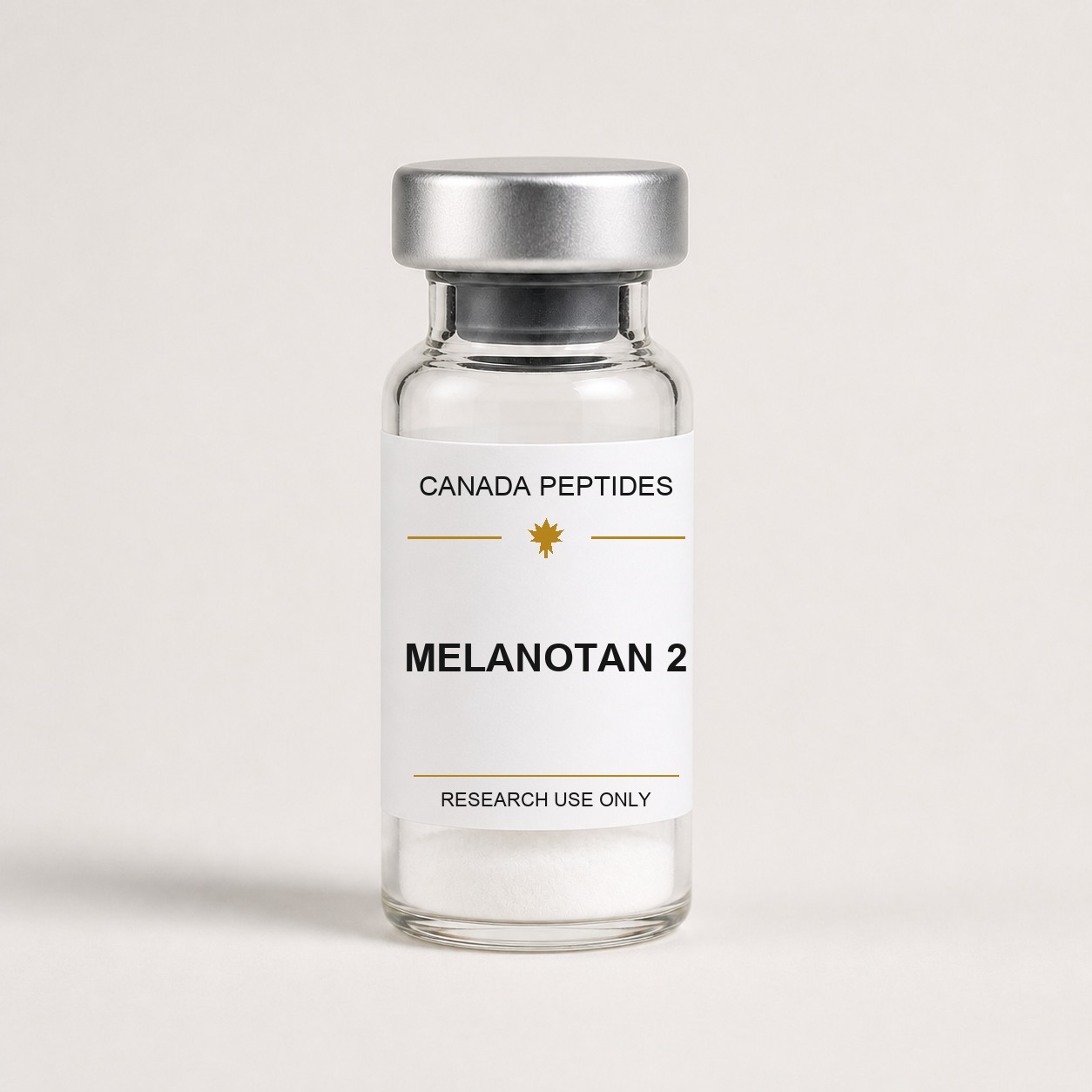
Reconstitution math is deterministic and independent of any dosing question: concentration = peptide mass ÷ diluent volume, and on a U-100 insulin syringe 100 units = 1 mL. Because Melanotan II is active at sub-milligram amounts, the arithmetic matters more than for most peptides. For a MELANOTAN 2 10MG vial:
10 mg ÷ 2 mL bacteriostatic water = 5 mg/mL, so each unit holds 50 mcg and 10 units (0.1 mL) hold 500 mcg. The 1998 study's 0.025 mg/kg dose for a 70 kg subject, 1.75 mg, would sit at 35 units.
10 mg ÷ 5 mL = 2 mg/mL, so 10 units hold 200 mcg and 25 units hold 500 mcg. The low end of the 1996 escalation, 0.01 mg/kg or 0.7 mg for 70 kg, would sit at 35 units at this concentration.
Larger volumes buy resolution on the syringe barrel for small amounts, at the cost of a shorter in-solution shelf life; the tryptophan residue means the reconstituted solution is kept dark as well as refrigerated.
Three things separate the Arizona numbers from a dose. First, the studies were tiny and short — healthy men for two weeks, single doses in a crossover — and development stopped before any dose-finding programme was completed; there is no validated human dose for any purpose. Second, the side effects appeared at the doses studied and were the reason the pigmentation programme moved to a different molecule; the escalation schedules circulated in tanning communities are not derived from those studies or any other. Third, the modern literature since roughly 2009 consists of dermatology and toxicology case reports from grey-market product — eruptive nevi, changing moles, melanoma diagnosed during use, rhabdomyolysis — and analyses of that product have repeatedly found variable peptide content and contamination, so a milligram figure on a grey-market label is not a milligram of anything in particular. The side-effects article summarises that record.
In Canada Melanotan II has no Health Canada market authorisation and no DIN, and Health Canada has issued advisories warning against unauthorised melanotan injectable tanning products; research-grade material is sold here for research use only. In September 2023 the U.S. FDA placed it in category 2 of its section 503A bulk-substances evaluation, so it may not be compounded there. It does not appear on the WADA Prohibited List. The Melanotan II research overview and the melanocyte and skin peptides guide cover the pharmacology and the history behind these figures.
Frequently asked questions
What dose of Melanotan II appears in the published studies?
The 1996 pilot Phase 1 study gave healthy men subcutaneous doses escalating through roughly 0.01 to 0.03 mg/kg, five days a week for two weeks. The 1998 erectile-dysfunction study used a single 0.025 mg/kg subcutaneous dose, about 1.75 mg for a 70 kg man. These are study parameters, not validated or recommended amounts.
What is the half-life of Melanotan II?
On the order of an hour in plasma after subcutaneous injection, far longer than native α-MSH because of the D-amino acid and lactam ring. Pigmentation persists for weeks because it reflects melanin already in the skin, not circulating peptide.
How is a 10 mg vial reconstituted?
2 mL of bacteriostatic water gives 5 mg/mL, so each U-100 unit holds 50 mcg; 5 mL gives 2 mg/mL, so a unit holds 20 mcg. The larger volume makes sub-milligram amounts readable on the barrel.
Is there a validated human dose of Melanotan II?
No. Development stopped in the early 2000s before dose-finding was completed, the 1990s studies were small and short, and no trial has enrolled since. Schedules circulated for tanning are not derived from controlled studies.
Is this medical advice?
No. This page reports what 1990s clinical studies administered and the arithmetic of a reconstituted vial. It is not medical advice, not a protocol, and not a suggestion that anyone administer the compound to a person.
Melanotan II dosage — research dosing notes — Canada Peptides