Retatrutide dosing questions come up constantly because it is a titrated compound — the amount used in research changes over time rather than staying fixed. This reference summarises how retatrutide was administered in published trials and links the handling math. It is research context only, not a dosing recommendation for human use. For the full compound and where to buy it in Canada, see the Retatrutide hub.
Titration in published trials
Retatrutide's Phase 2 and Phase 3 programs used once-weekly subcutaneous administration with gradual dose escalation — starting low and stepping up over successive weeks rather than beginning at a target dose. This slow titration is characteristic of the GLP-1 receptor-agonist class and is the standard way tolerability is managed in the literature. The exact step schedule varies by study arm; consult the primary TRIUMPH trial literature for specifics.
Reconstitution and dosing math
Retatrutide ships lyophilised and is reconstituted with bacteriostatic water before use. The volume you draw for a given amount depends on how much water you add — that is a units-and-concentration calculation, not a fixed number. Work it through with the dosing-math guide and the reconstitution walkthrough before measuring anything.
Formats change the workflow
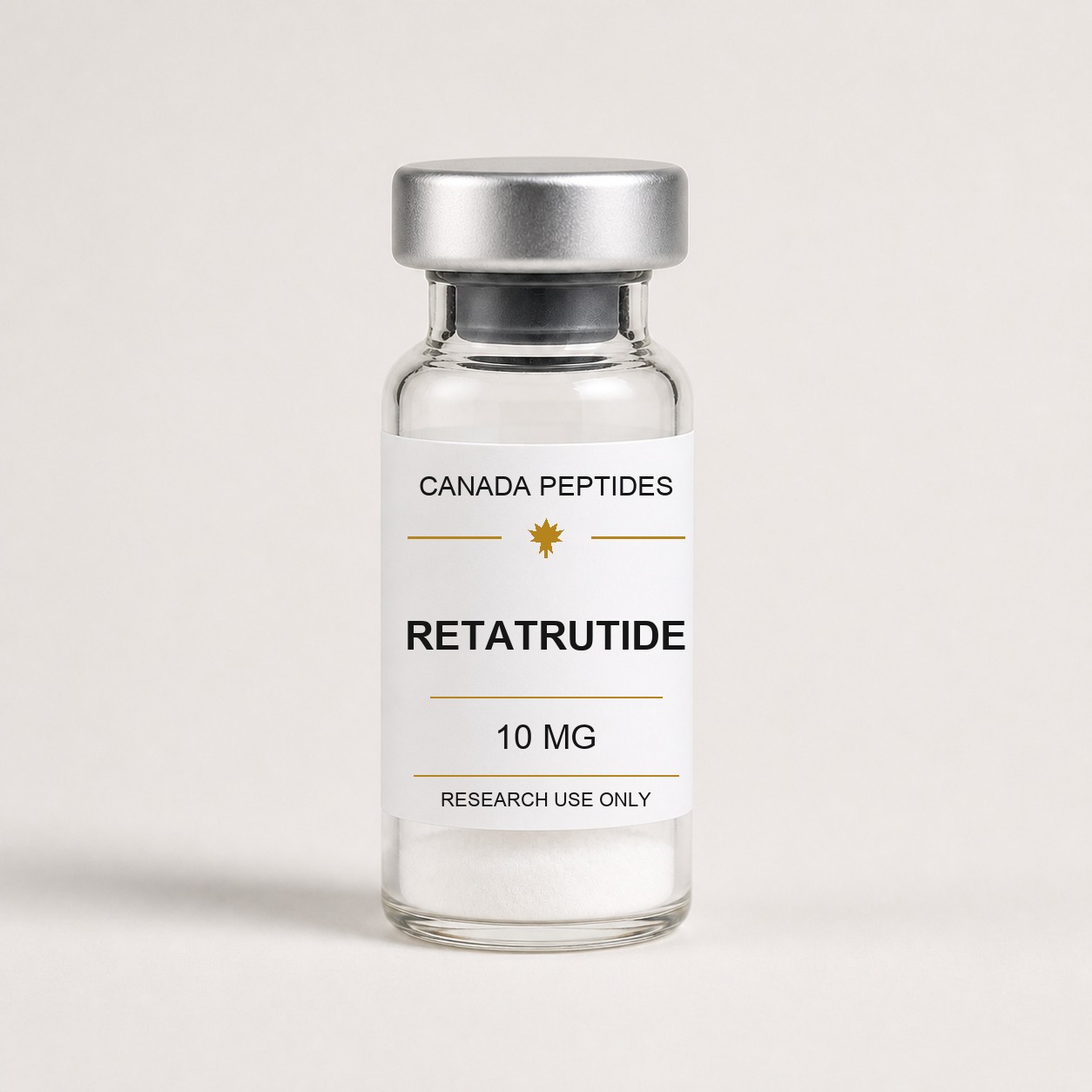
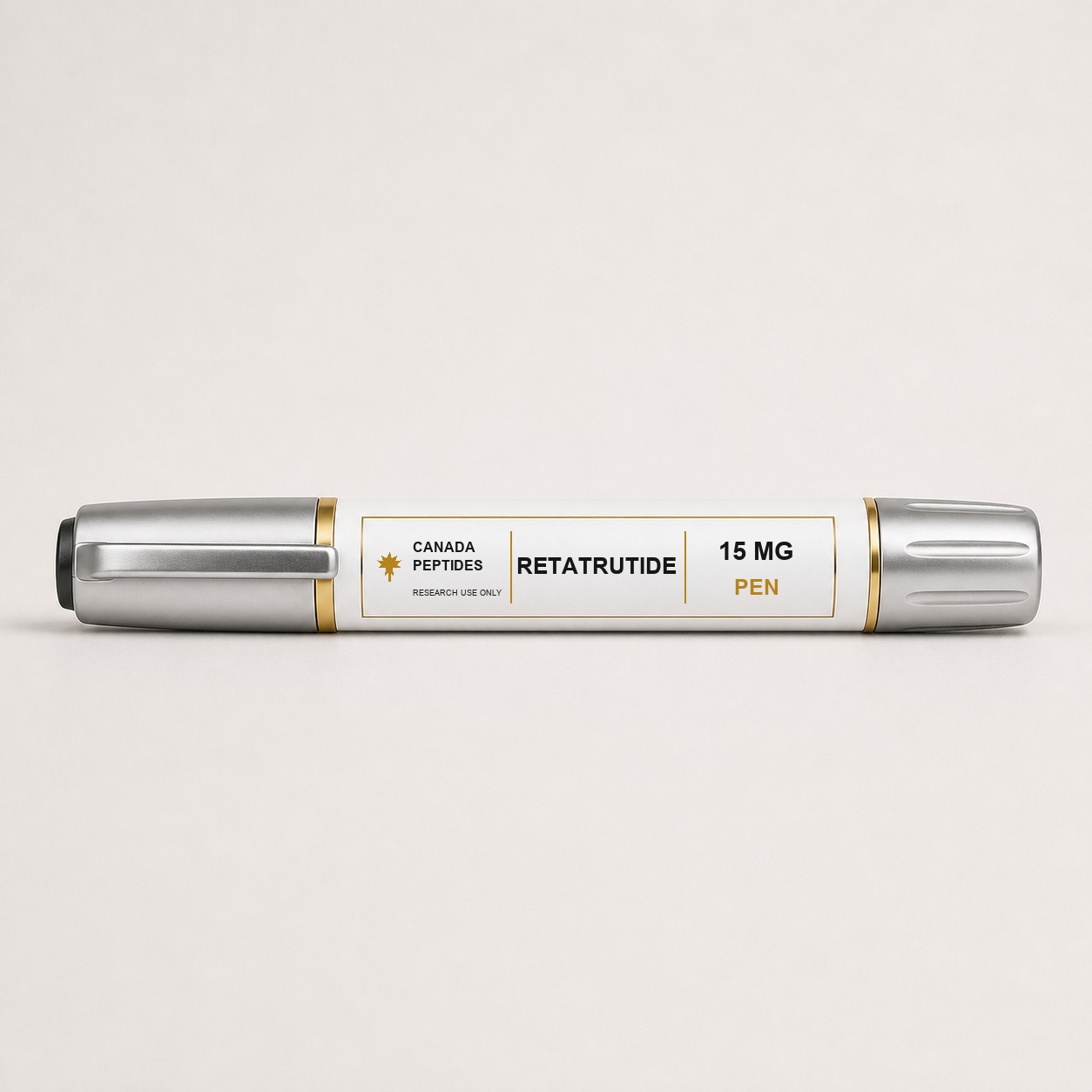
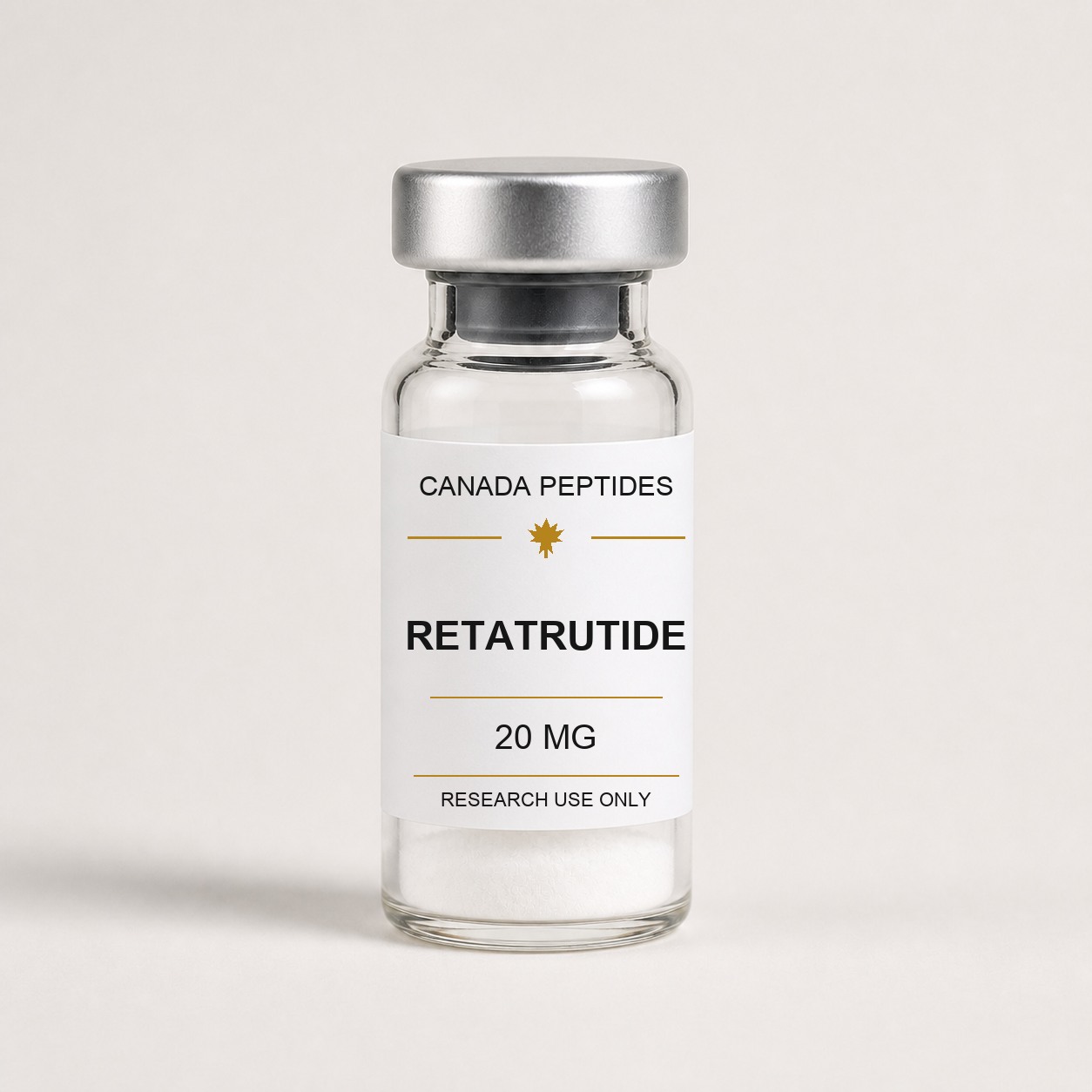
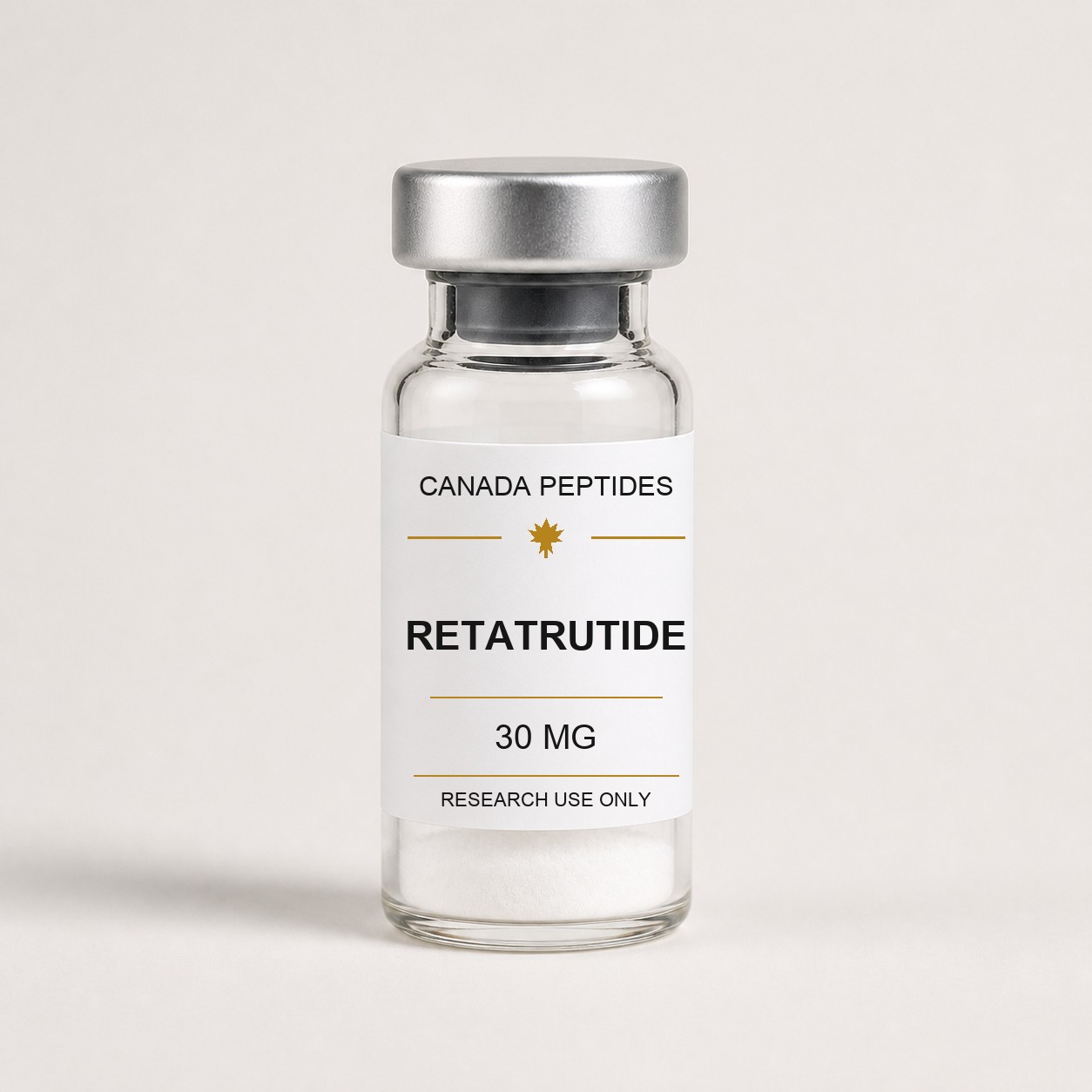
The draw-up 10 mg, 20 mg, and 30 mg vials are measured with a syringe each time. The 15 mg reloadable pen is dialed instead — see the pen guide for how the dialed workflow differs from vial draw-up.
Frequently asked questions
How often was retatrutide dosed in trials?
Published Phase 2/3 protocols used once-weekly subcutaneous administration.
Did retatrutide use a fixed dose?
No. Trials titrated upward from a low starting amount over several weeks rather than starting at a target dose.
How do I calculate a draw volume?
The volume depends on your reconstitution concentration. Use the dosing-math and reconstitution guides to work it out; this article does not provide a human dosing recommendation.
Is this dosing information medical advice?
No. Retatrutide is an investigational compound supplied for research use only. Nothing here is medical advice.