July 21, 2026·5 min read·semaglutide, dosage, GLP-1, pharmacokinetics, reconstitution
Semaglutide dosage — research dosing notes
A research-literature overview of semaglutide dosage: the STEP and SUSTAIN escalation schedules, the 7-day half-life behind the four-week cadence, and the reconstitution math from lyophilized vial to syringe units.
Semaglutide dosage — research dosing notes — Canada Peptides
Semaglutide is the reference GLP-1 receptor agonist, and most questions about it converge on one theme: how the reported dosing schedules are structured, and why. This page is a literature-and-protocol overview of semaglutide dosage as it appears in the published trial record — the escalation cadences, the pharmacokinetic reasoning behind them, and the reconstitution arithmetic that turns a lyophilized vial into a measured volume. It is not medical advice and not a human-dosing instruction.
Why semaglutide is dosed once weekly
Semaglutide's dosing cadence is a direct consequence of its pharmacokinetics. The molecule carries a C18 fatty-diacid chain attached at lysine-26, which drives tight, reversible binding to serum albumin. That albumin binding is the principal mechanism of protraction — it slows renal clearance and enzymatic degradation, stretching the elimination half-life to roughly 7 days (Springer, Clinical Pharmacokinetics).
Two numbers follow from that half-life. Time to maximum concentration after a subcutaneous dose is about 1–3 days, and because the ~7-day half-life matches the 7-day dosing interval, concentrations accumulate roughly three-fold before plateauing. Steady state is reached at about 4–5 weeks of unchanged weekly dosing. This is the pharmacological reason dose changes in the trials are spaced four weeks apart: each new dose level is given time to approach its own steady state before the next step.
The escalation schedules in the literature
Across the SUSTAIN (type 2 diabetes) and STEP (obesity) programmes, semaglutide is never started at its maintenance dose. Every published regimen opens at a sub-therapeutic 0.25 mg once weekly and steps up on a fixed four-week cadence. The stated rationale is consistent: gradual escalation blunts the gastrointestinal adverse events — nausea, vomiting, diarrhea — that accompany rapid GLP-1 receptor engagement.
The two programmes diverge at the target dose:
Programme
Reported escalation (once weekly)
Target maintenance
Time to target
Glycemic control (SUSTAIN / Ozempic label)
0.25 → 0.5 → 1.0 → 2.0 mg
0.5, 1.0, or 2.0 mg
~12–16 weeks
Weight management (STEP / Wegovy label)
0.25 → 0.5 → 1.0 → 1.7 → 2.4 mg
2.4 mg
~16–17 weeks
The 0.25 mg starting dose is explicitly described as an initiation dose for tolerability, not a therapeutic target. In the STEP weight-management programme, the 2.4 mg maintenance dose was the level tested in the pivotal 68-week STEP 1 trial, where the 2.4 mg once-weekly arm reported roughly 14.9% mean weight loss versus about 2.4% for placebo. The four-week-per-step cadence is the same in both programmes; only the number of steps and the ceiling differ.
Reconstitution and dose-volume arithmetic
Lyophilized semaglutide is a dry powder; the research literature works in milligrams and micrograms, but a syringe measures volume. Bridging the two is arithmetic, not judgment. The concentration after reconstitution is simply the vial's mass divided by the volume of bacteriostatic water added.
A worked example, for illustration only:
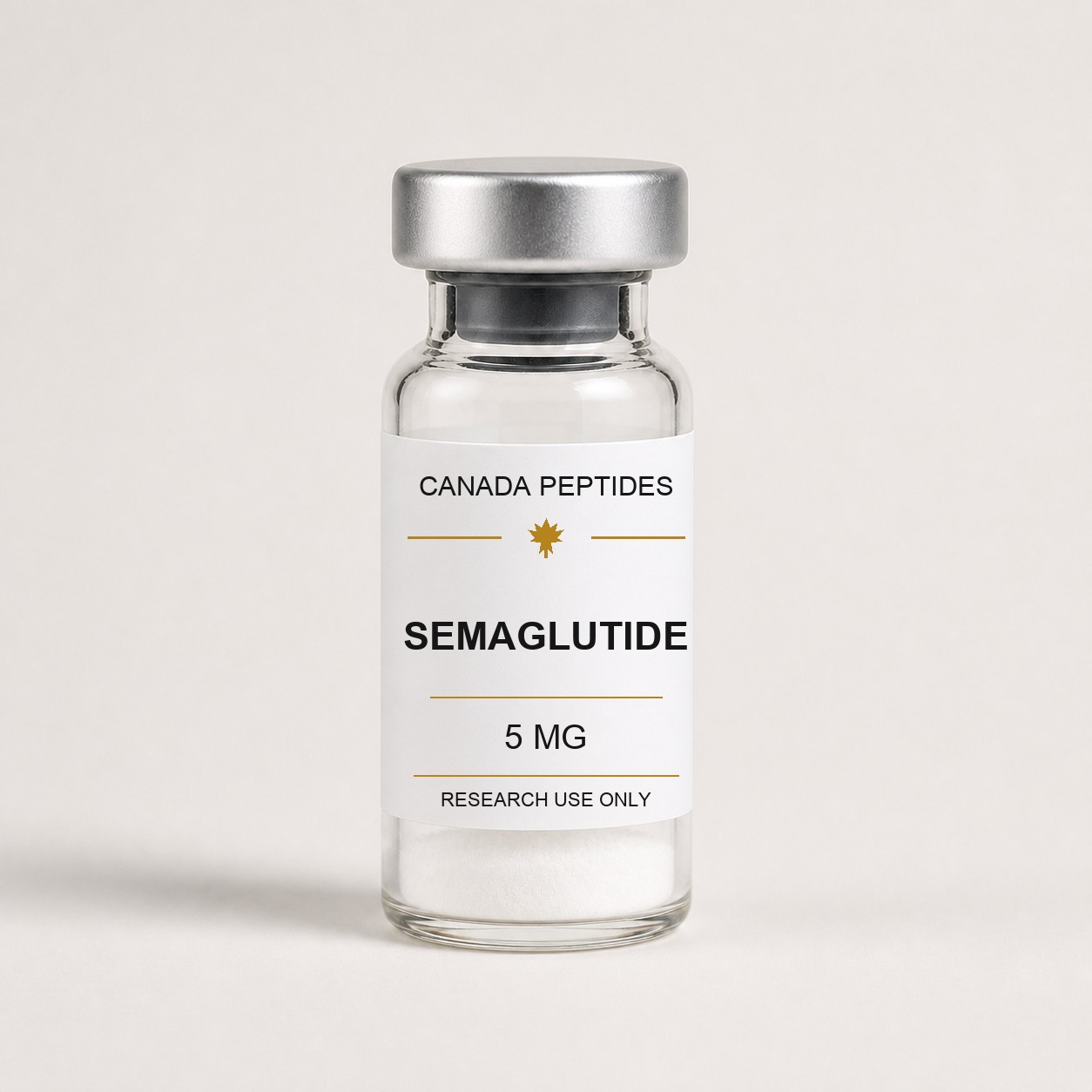
A 5 mg vial reconstituted with 2 mL of bacteriostatic water yields 2.5 mg/mL — i.e. 2500 mcg per mL.
A 250 mcg aliquot is then 250 ÷ 2500 = 0.1 mL, which on a U-100 insulin syringe reads as 10 units (a U-100 syringe puts 100 units to the mL).
Doubling the diluent to 4 mL halves the concentration to 1.25 mg/mL, so the same 250 mcg aliquot becomes 0.2 mL, or 20 units — easier to draw accurately, at the cost of a larger injection volume.
The concentration you choose only changes the volume math; it does not change the mass in each aliquot. For the general conversions between mg, mcg, IU, and syringe units, see the dosing-math guide; for the mechanics of adding diluent, swirling rather than shaking, and storage after mixing, see reconstitution 101.
Half-life, missed intervals, and titration logic
Because roughly half of any given dose remains in circulation a week later, semaglutide concentrations are relatively forgiving of small timing shifts — a defining feature of a 7-day half-life. The same property explains why the literature never front-loads: since it takes 4–5 weeks to see the full effect of a dose level, escalating faster than steady state would arrive doesn't reach the target concentration any sooner; it only stacks the peak-associated GI effects. The fixed four-week step is the compromise the trials settled on between reaching the target dose and staying tolerable.
Frequently asked questions
Why does every semaglutide schedule start at 0.25 mg?
The 0.25 mg dose is an initiation dose chosen for tolerability, not a therapeutic target. Trial protocols describe it as a way to let the gastrointestinal system adapt to GLP-1 receptor activation before stepping up. Efficacy in the weight-management literature is tied to the higher maintenance doses.
Why are dose increases spaced four weeks apart?
Semaglutide's ~7-day half-life means each dose level takes about 4–5 weeks to approach its own steady-state concentration. Four-week steps roughly align dose changes with that pharmacokinetic timeline, so each level is largely established before the next increase.
What is the difference between the diabetes and obesity dosing ceilings?
In the reported literature, glycemic-control regimens target maintenance doses of 0.5, 1.0, or 2.0 mg weekly, while weight-management regimens escalate through an extra 1.7 mg step to a 2.4 mg maintenance dose. Both begin at 0.25 mg and step every four weeks.
Does reconstitution volume change the dose?
No. The mass in each aliquot is fixed by the math; the diluent volume only changes how many syringe units correspond to that mass. More diluent means a lower concentration and a larger, easier-to-measure volume for the same amount of compound.
Is this a protocol I can follow?
No. This is a research-literature overview explaining how semaglutide has been dosed in published studies. It is not medical advice, and the compound is sold for laboratory research use only. Any human use is a decision for a licensed clinician.