September 23, 2026·6 min read·thymosin-alpha-1, thymalfasin, dosage, immune peptide, peptide research, canada
Thymosin alpha-1 dosage — research dosing notes
What the thymalfasin trials and the Zadaxin label report about thymosin alpha-1 dosage: the 1.6 mg subcutaneous unit dose, its cadences, the 2-hour half-life and 5 mg vial arithmetic.
Thymosin alpha-1 dosage — research dosing notes — Canada Peptides
Thymosin alpha-1 (Tα1, thymalfasin) is a 28-amino-acid acetylated peptide that acts on Toll-like receptors on dendritic cells and, downstream, on T-cell and natural-killer function. It is unusual among research peptides in having a large human dosing record: under the brand name Zadaxin it is an approved medicine in more than thirty countries, and the same 1.6 mg subcutaneous unit dose recurs through randomised trials in hepatitis B, sepsis and oncology. This page collects what that literature reports about route, amount and cadence, the reconstitution arithmetic for the vial size sold, and the reasons an approved product's regimen is not a protocol for research-grade material. It is a research reference, not advice. The Thymosin Alpha-1 profile is the reference entry.
The 1.6 mg unit dose and where it comes from
Almost every human figure for thymosin alpha-1 is a multiple of one number. The Zadaxin label abroad specifies 1.6 mg injected subcutaneously twice weekly, for six to twelve months, in chronic hepatitis B. The randomised hepatitis B trials that support that approval used the same regimen: a 1998 controlled trial in Hepatology gave 1.6 mg twice weekly for 26 weeks and reported higher sustained virological response rates than controls, with the difference emerging months after the course ended. Vaccine-adjuvant studies in poor responders — haemodialysis patients and older adults — gave 1.6 mg twice weekly around the vaccination dates.
The 1.6 mg figure is a fact about a manufactured product with a monograph and lot-level oversight. It attaches to that product, not to the molecule wherever it is found, and it was set for patients with a defined immune deficit or infection, not for immunologically intact adults.
Other cadences in the trial record
The unit dose stays fixed while the rhythm changes with the indication.
Severe sepsis. The ETASS trial (Critical Care, 2013) randomised 361 patients in China and gave 1.6 mg twice daily for five days, then once daily for two. It reported a non-significant reduction in 28-day mortality.
Metastatic melanoma. A 488-patient randomised study (Journal of Clinical Oncology, 2010) added 1.6 or 3.2 mg on five consecutive days of each four-week dacarbazine cycle. Response rate improved; the primary survival endpoint did not.
COVID-19. Retrospective Chinese cohorts (Clinical Infectious Diseases, 2020) described 1.6 mg once or twice daily for around a week in severe disease. These were not randomised.
Intravenous and intramuscular administration appear only in older studies; the approved product and every modern trial used the subcutaneous route.
Half-life and why the regimens run for weeks
After a 1.6 mg subcutaneous injection, peak plasma concentration is reached within one to two hours and the elimination half-life is about two hours. The peptide is cleared by peptidases and does not accumulate. That short residence time is the reason twice-weekly dosing looks odd on paper and makes sense in practice: the endpoint is immune-cell differentiation, which unfolds over days to weeks, so the clinical regimens track a biological timescale rather than a plasma level. The half-life calculator shows how quickly plasma concentration falls between doses on the twice-weekly and twice-daily schedules above.
Reconstitution arithmetic for a 5 mg vial
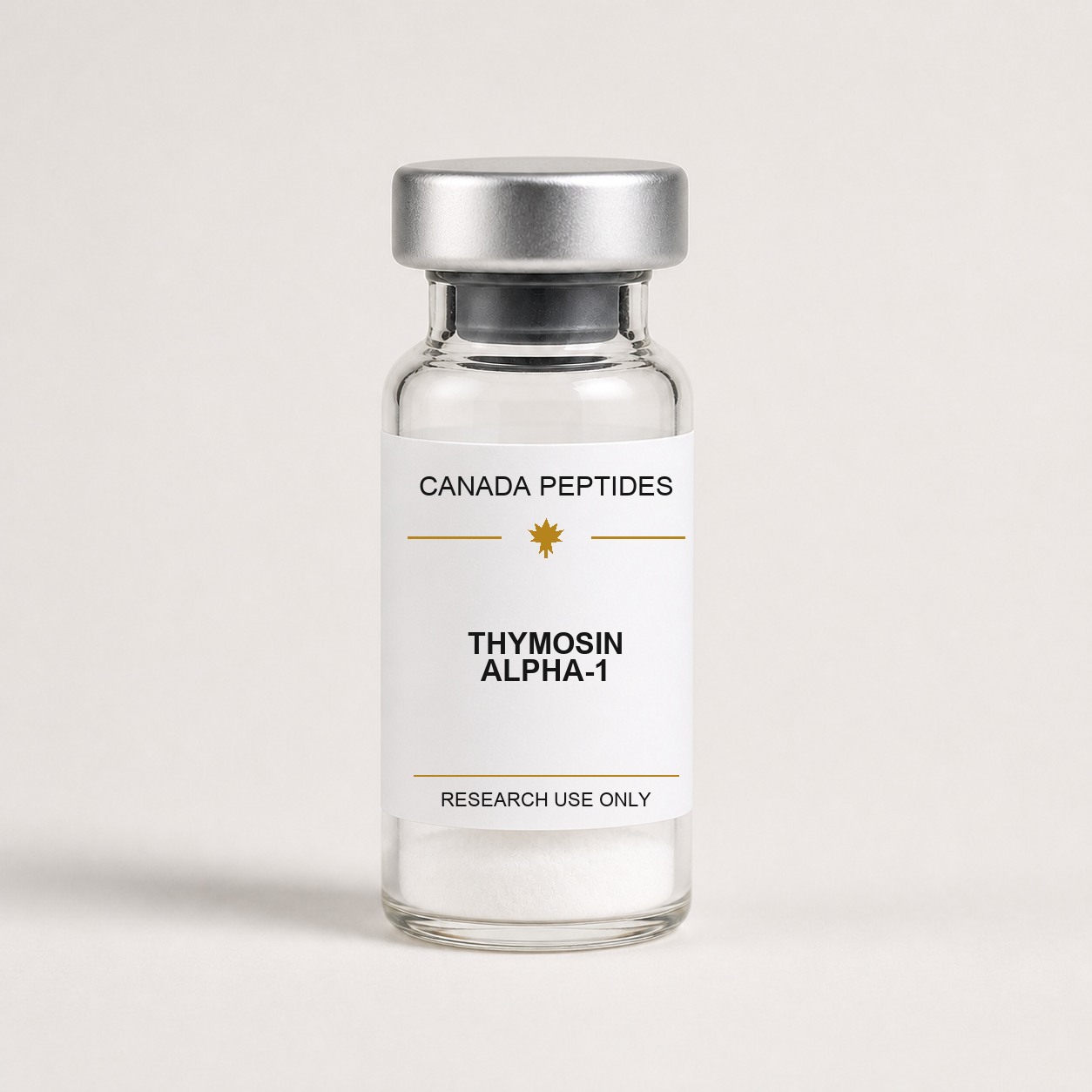
Reconstitution math is independent of any dosing question: concentration = peptide mass ÷ diluent volume, and on a U-100 insulin syringe 100 units = 1 mL. For a THYMOSIN ALPHA-1 5MG vial:
5 mg ÷ 1 mL bacteriostatic water = 5 mg/mL, so 10 units (0.1 mL) hold 0.5 mg and 32 units hold 1.6 mg, the unit dose that recurs through the literature.
5 mg ÷ 2 mL = 2.5 mg/mL, so 10 units hold 0.25 mg and 1.6 mg sits at 64 units (0.64 mL).
A 5 mg vial contains three full 1.6 mg draws (4.8 mg). On the twice-weekly clinical rhythm that is a week and a half, which keeps the reconstituted solution well inside its refrigerated shelf life; on the twice-daily sepsis rhythm a vial lasts a day and a half.
Add the water slowly down the vial wall and let the powder dissolve without shaking — as a strongly acidic, water-soluble peptide it goes into solution readily. Full procedure in Reconstitution 101 and the reconstitution glossary entry; the mg → mcg → syringe-unit conversions are worked through in Dosing math, the dosage calculator handles other volumes, and the vial planner turns a cadence into a draw-down schedule.
Data maturity — what the record does and does not support
Thymosin alpha-1 has more human dosing data than nearly any other compound in this catalogue, and the data is narrow. It supports a specific statement: 1.6 mg subcutaneously, on the rhythms above, was studied and approved abroad in patients with hepatitis B, sepsis, cancer or a poor vaccine response. It does not support a dose for immune "optimisation" in healthy people, because no such trial exists, and it says nothing about research-grade material, which has no monograph and no regulatory review. In Canada thymalfasin holds no Health Canada market authorisation and no DIN; it is sold here for research use only. In September 2023 the U.S. FDA placed it in category 2 of its section 503A bulk-substances evaluation, so it may not be compounded there. It is not named on the WADA Prohibited List, though tested athletes should verify against the current edition. The thymosin alpha-1 research overview covers the immunology behind these regimens.
Frequently asked questions
What dose of thymosin alpha-1 appears in the published studies?
Almost always 1.6 mg subcutaneously. The hepatitis B trials and the Zadaxin label abroad use it twice weekly for six months or longer; the ETASS sepsis trial used it twice daily for five days then daily for two; the melanoma study used 1.6 or 3.2 mg on five consecutive days per cycle. These are trial and label facts, not recommendations.
What is the half-life of thymosin alpha-1?
About two hours in plasma after subcutaneous injection, with peak concentration at one to two hours. The immune effects last days to weeks because the endpoint is cell differentiation, not circulating peptide.
How is a 5 mg vial reconstituted?
1 mL of bacteriostatic water gives 5 mg/mL, so 32 units on a U-100 syringe hold 1.6 mg; 2 mL gives 2.5 mg/mL, so the same amount sits at 64 units. The vial holds three 1.6 mg draws.
Is the Zadaxin regimen a dose for research-grade thymosin alpha-1?
No. The regimen belongs to a specific approved product studied in defined patient groups. Research-grade material has no approval anywhere, and the vial sold here is for laboratory research only.
Is this medical advice?
No. This page reports what clinical trials and a foreign product label describe about thymosin alpha-1 administration. It is not medical advice, not a protocol, and not a suggestion that anyone administer the compound to a person.