Body Protection Compound 157
BPC-157 in Canada
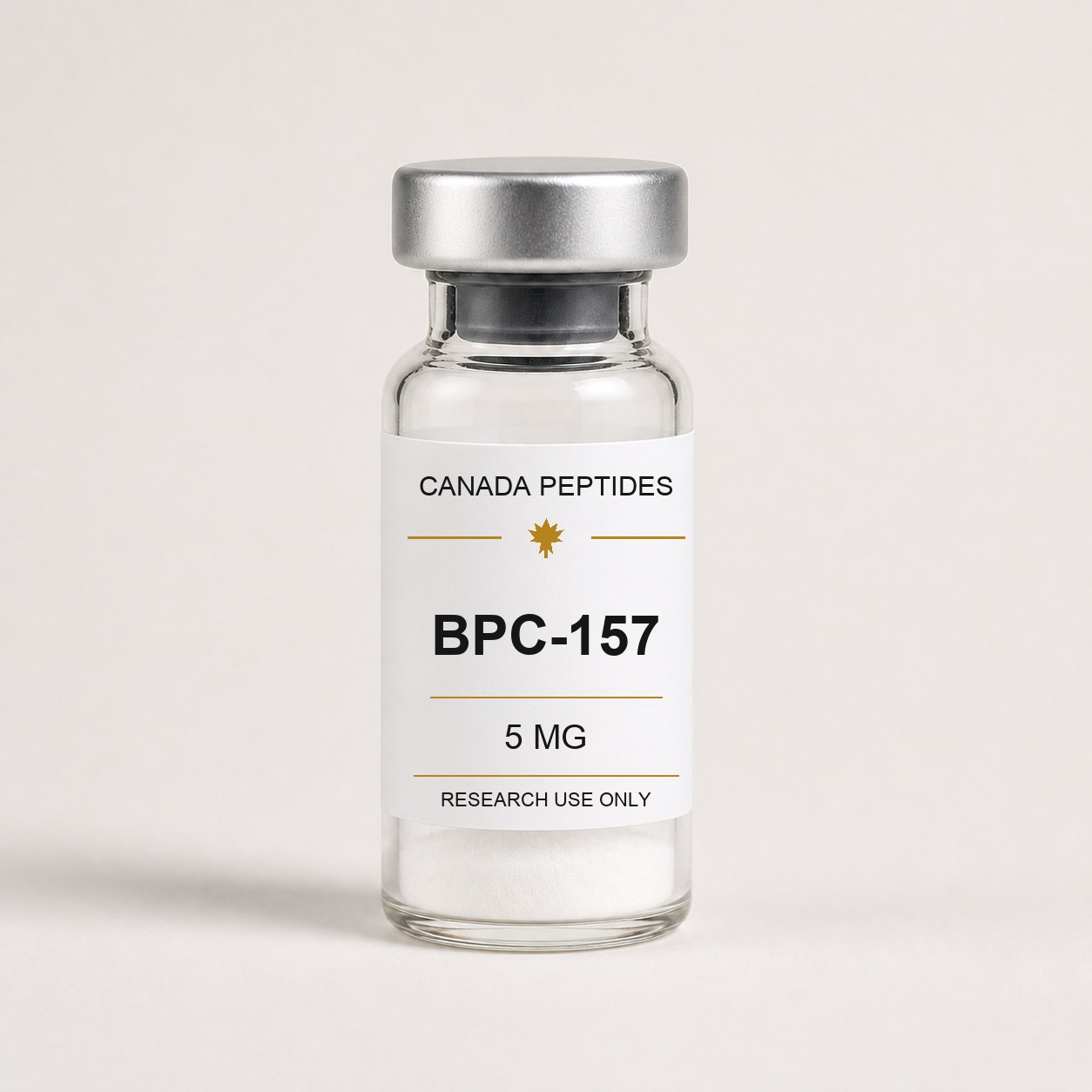
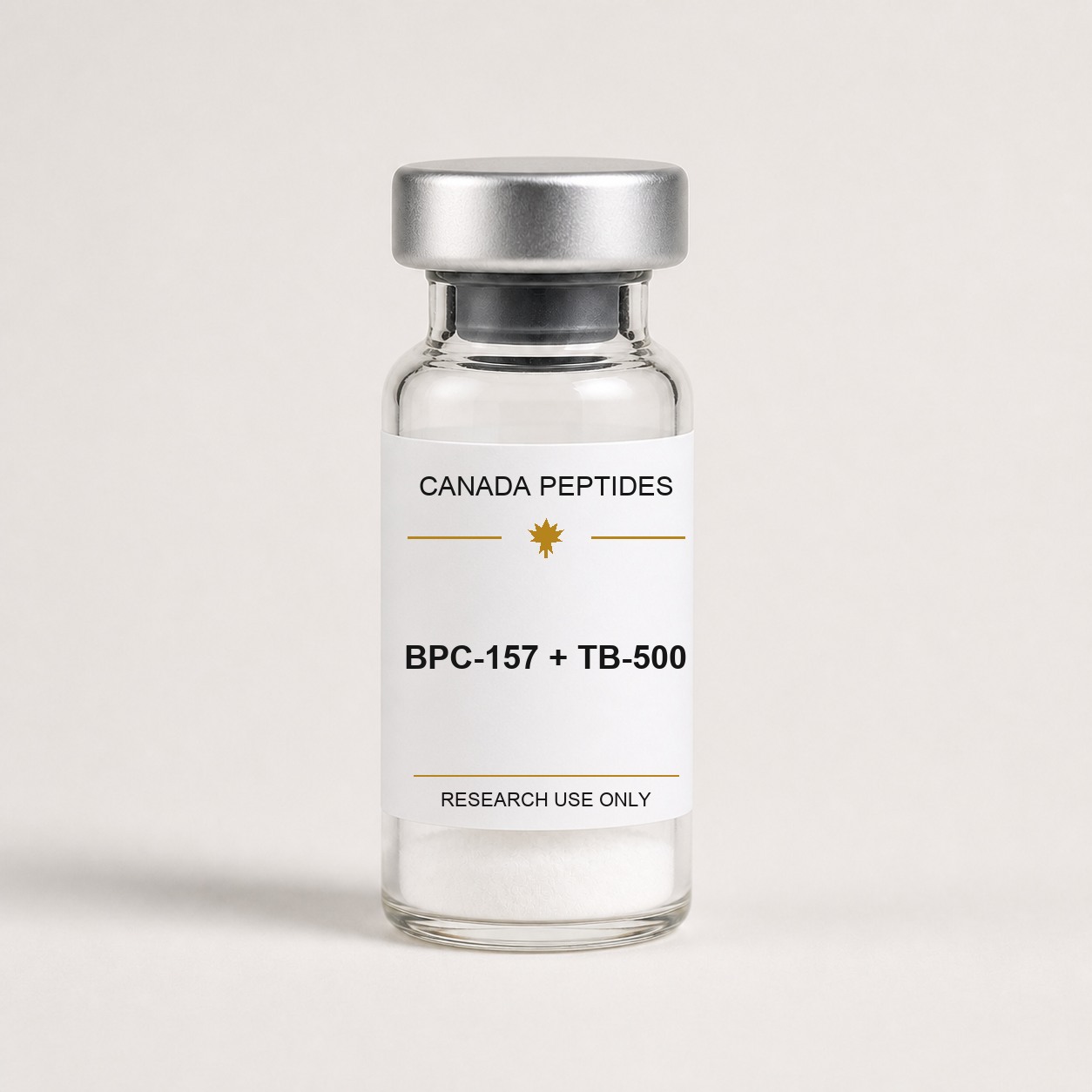
BPC-157 is a synthetic pentadecapeptide studied in research contexts around angiogenesis and tissue-repair signalling. Canada Peptides carries research-grade BPC-157 as a standalone vial and in a BPC-157 + TB-500 blend, priced and shipped in CAD. Everything below is for research and educational use only.
BPC-157 — for sale
What is BPC-157?
BPC-157 (Body Protection Compound 157) is a synthetic 15-amino-acid peptide derived from a sequence found in gastric juice. In the research literature it is studied around angiogenesis — new blood-vessel formation — and tissue-repair signalling. For the full mechanism, see the BPC-157 research overview.
BPC-157 and TB-500
BPC-157 is frequently researched alongside TB-500 (a thymosin-β4 fragment) because they are studied for complementary repair pathways — which is why the BPC-157 + TB-500 blend exists. The BPC-157 vs TB-500 comparison breaks down how the two differ.
Dosing in research
Research protocols for BPC-157 typically use subcutaneous administration. Our dosing-math and reconstitution guides cover the handling math. This is research context only — not a dosing recommendation for human use.
How to get BPC-157 in Canada
Research-grade BPC-157 is available to order on this page — standalone or in the TB-500 blend — shipped within Canada in CAD for research use only. Reconstitution and handling guidance is linked above.
Further reading
BPC-157 dosage — research dosing notes
A literature review of BPC-157 dosage: the animal dose ranges actually studied, the measured pharmacokinetics in rats and dogs, and why no human dose has been established. Research use only.
BPC-157 Dosing: A Research Reference
How BPC-157 is handled in research — administration route, reconstitution, and the dosing math. Research use only, not medical advice.
BPC-157 Side Effects: What the Research Reports
What the literature reports about BPC-157 tolerability, framed for research. Research use only, not medical advice.
BPC-157 Oral vs Injectable: What the Research Uses
Oral vs injectable BPC-157 — the routes seen in research and the stability considerations behind them. Research use only, not medical advice.
BPC-157 vs TB-500—healing peptides compared
Two foundational soft-tissue research peptides, their distinct mechanisms, and why they're often stacked together.
BPC-157 — a research overview
15-amino-acid peptide derived from gastric protein with pro-angiogenic and tissue-protective mechanisms across soft-tissue and neurological models.
BPC-157 FAQ
- Is BPC-157 for sale in Canada?
- Yes. Research-grade BPC-157 is available in Canada from Canada Peptides — as a standalone 5 mg vial and in a BPC-157 + TB-500 blend — priced and shipped in CAD. It is supplied strictly for laboratory and research use.
- Where can I buy BPC-157 in Canada?
- You can order research-grade BPC-157 directly on this page. It ships within Canada in CAD, for research use only.
- What is BPC-157?
- BPC-157 (Body Protection Compound 157) is a synthetic pentadecapeptide — a 15-amino-acid sequence derived from a protein found in gastric juice. It is studied in research contexts around angiogenesis (new blood-vessel formation) and tissue-repair signalling.
- BPC-157 vs TB-500 — what's the difference?
- They are studied for complementary repair pathways: BPC-157 around angiogenic and cytokine signalling, TB-500 (a thymosin-β4 fragment) around cell migration and actin remodelling. They are frequently researched together, which is why the blend exists. See the BPC-157 vs TB-500 comparison.
- Is BPC-157 sold standalone or as a blend?
- Both. A standalone 5 mg BPC-157 vial and a combined BPC-157 + TB-500 repair blend are available.
- Is BPC-157 research use only?
- Yes. The BPC-157 sold here is supplied strictly for laboratory and research use. Nothing on this page is medical advice or a therapeutic claim.
Research & educational use only. This page is informational and does not constitute medical advice or a therapeutic claim.