Mitochondrial & metabolic signalling
Energy Peptides in Canada
2 compounds in stock
This category covers compounds studied around mitochondrial function and substrate metabolism rather than a hormonal axis. It is deliberately small: two compounds with genuinely distinct mechanisms, both active areas of research into cellular energy handling. Priced and shipped in CAD, for laboratory and research use only.
Energy — for sale
Mitochondrial-derived peptides
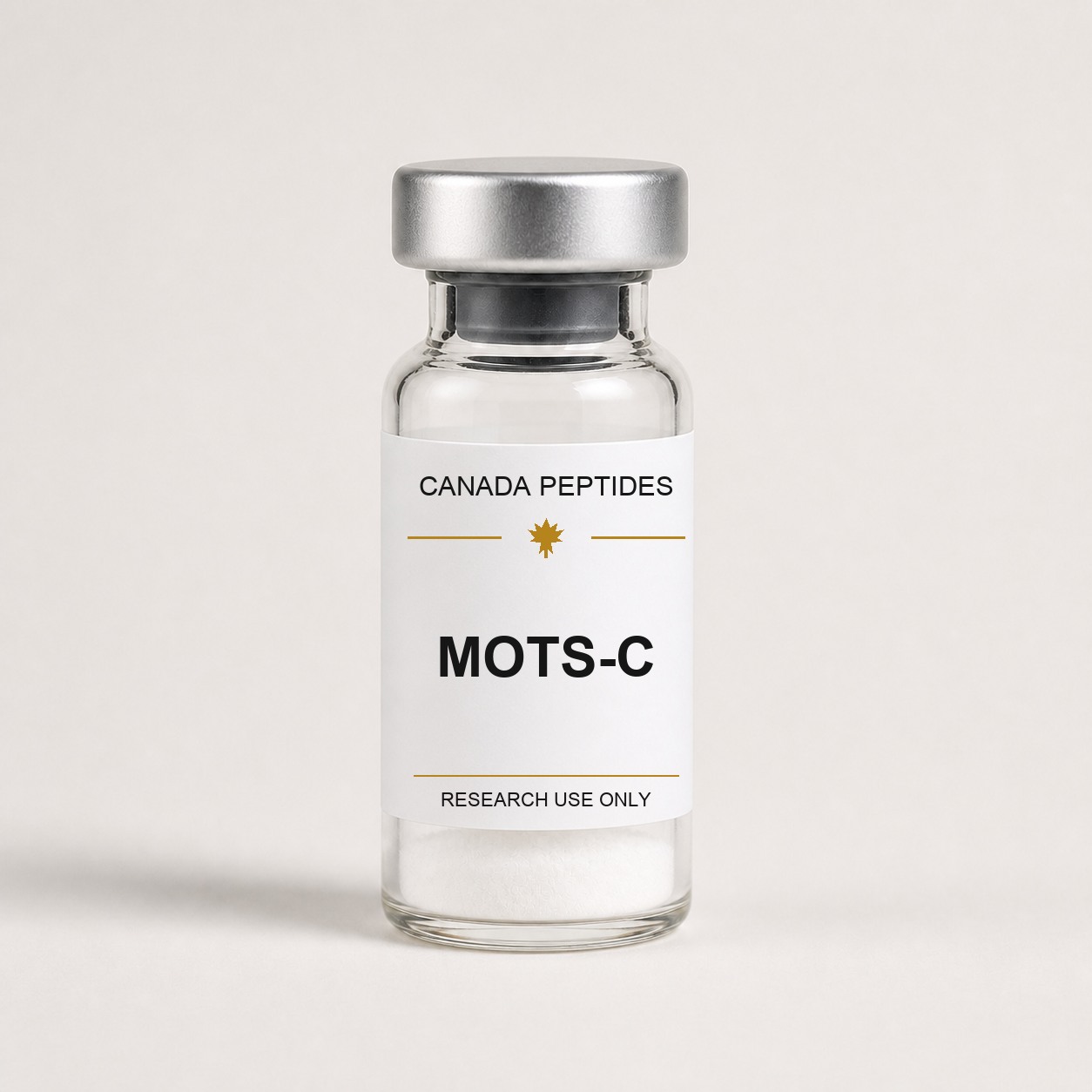
MOTS-c is a 16-amino-acid peptide encoded in mitochondrial DNA rather than the nuclear genome — one of a small set of mitochondrial-derived peptides identified in the last two decades. Research interest centres on AMPK signalling and metabolic regulation. Because it sits at the intersection of energy and ageing research, it is often compared against longevity compounds — see Epithalon vs MOTS-c.
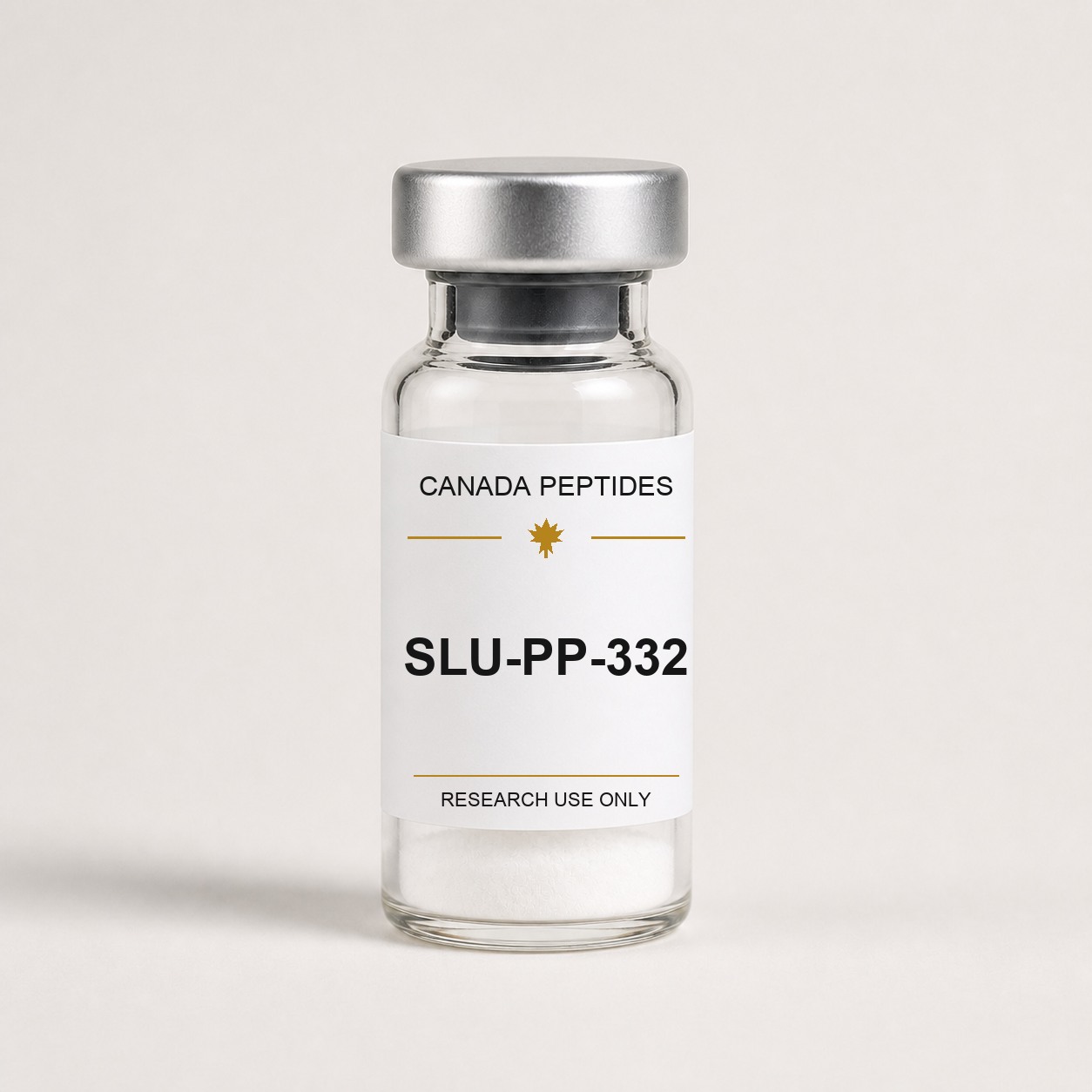
SLU-PP-332 is not a peptide
Worth stating plainly: SLU-PP-332 is a small-molecule oestrogen-related receptor (ERR) agonist, not a peptide. It sits in this category because the research context — mitochondrial biogenesis and exercise-mimetic signalling — is the same. It handles differently from a lyophilized peptide, so read the compound page before planning storage.
Where this category overlaps
Energy and metabolic research overlap heavily, and the boundary here is mechanism: incretin and GHRH compounds sit under metabolic, while this category is limited to compounds acting on mitochondrial and receptor-level energy signalling. NAD+ sits under longevity for the same reason.
Further reading
SLU-PP-332 side effects — what the research reports
SLU-PP-332 side effects by evidence tier: no human data of any kind, what the short mouse studies did and did not measure, the cardiac and carcinogenicity questions, and Canadian and WADA status.
SLU-PP-332 dosage — research dosing notes
SLU-PP-332 dosage as the literature reports it: the 50 mg/kg twice-daily intraperitoneal mouse regimen, the DMSO vehicle, the absence of any human data, and stock-solution arithmetic for a 30 mg vial.
MOTS-c side effects — what the research reports
MOTS-c side effects have never been characterized in a completed human trial. What the CB4211 analog study, rodent work, and uncontrolled self-report actually show — and where the data stops.
MOTS-c dosage — research dosing notes
What the literature actually reports on MOTS-c dosage: the rodent mg/kg ranges from Lee 2015 and Reynolds 2021, the human trial regimens, half-life context, and reconstitution math for a 10 mg vial.
SLU-PP-332 — a research overview
A measured research overview of SLU-PP-332: how this pan-ERR agonist works as an exercise mimetic, what the rodent data actually shows, its pharmacokinetic limits, and why there is still no human evidence.
MOTS-c — a research overview
Mitochondrial-derived peptide regulating AMPK and metabolic aging, with emerging human data on insulin sensitivity and exercise physiology.
Energy peptides FAQ
- What are mitochondrial peptides?
- Mitochondrial-derived peptides are short sequences encoded in mitochondrial DNA rather than the nuclear genome. MOTS-c is the best-studied example, investigated in research contexts around AMPK signalling and metabolic regulation.
- Is SLU-PP-332 a peptide?
- No. SLU-PP-332 is a small-molecule ERR (oestrogen-related receptor) agonist. It is stocked in this category because the research context — mitochondrial biogenesis and exercise-mimetic signalling — is shared with MOTS-c, but it is chemically a different class and handles differently.
- Can I buy MOTS-c in Canada?
- Yes. Research-grade MOTS-c 10 mg is available from Canada Peptides, priced in CAD and shipped within Canada, for laboratory and research use only.
- How is this different from the metabolic category?
- The split is by mechanism. Metabolic covers incretin receptor agonists (GLP-1, GIP, glucagon) and GHRH analogues. This category is limited to compounds studied at the mitochondrial and receptor-signalling level of energy metabolism.
Other categories
- CognitiveSemax, Selank, Cerebrolysin — neuropeptides studied around BDNF signalling and attention.
- RecoveryBPC-157, TB-500, KPV and glutathione — angiogenic, cytoskeletal and anti-inflammatory pathways.
- SleepDSIP — the delta sleep-inducing peptide, studied around slow-wave sleep architecture.
- MetabolicRetatrutide, semaglutide, tirzepatide and more — GLP-1, GIP and glucagon receptor research.
- LongevityCJC-1295, ipamorelin, GHRP-2/6, epithalon and NAD+ — GH-axis and cellular-ageing research.
- SkinGHK-Cu, GLOW, KLOW and Melanotan 2 — copper-peptide and melanocortin research.
- FoundationalKisspeptin, PT-141 and thymosin alpha-1 — upstream endocrine and immune signalling.
Research & educational use only. This page is informational and does not constitute medical advice or a therapeutic claim.