GH axis & cellular ageing
Longevity Peptides in Canada
9 compounds in stock
Longevity is really two research areas sharing a shelf: growth-hormone secretagogues that act on the GH axis, and cellular-ageing compounds studied around telomerase and redox metabolism. The secretagogues are the larger group and the one where mechanism differences are most often misunderstood. Priced and shipped in CAD, for laboratory and research use only.
Longevity — for sale
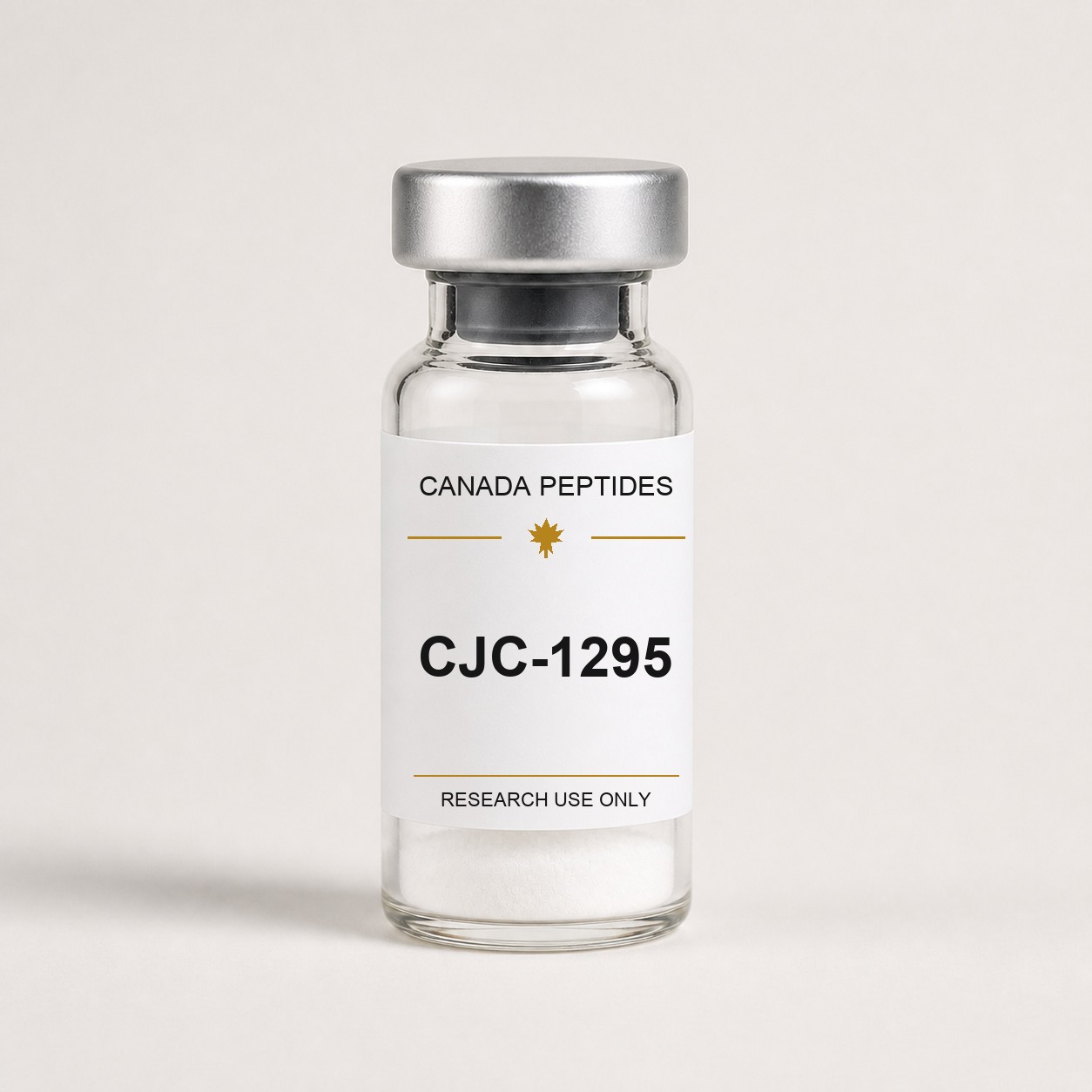
GHRH analogues vs ghrelin mimetics
The GH secretagogues split into two mechanisms that are routinely conflated. CJC-1295 is a GHRH analogue — it acts on the GHRH receptor. Ipamorelin, GHRP-2 and GHRP-6 are ghrelin mimetics acting on GHS-R1a. Because the two pathways are complementary, they are frequently studied in combination — hence the CJC-1295 + ipamorelin stack. Growth hormone secretagogues explained is the category primer.
DAC, half-life, and why it matters
CJC-1295 is stocked both with and without DAC (drug affinity complex), and the difference is pharmacokinetic rather than mechanistic: DAC binds albumin and extends half-life substantially, which changes dosing frequency in research protocols. CJC-1295 with or without DAC covers the trade-off, and ipamorelin vs CJC-1295 compares across the mechanism line.
Cellular ageing compounds
Epithalon is a synthetic tetrapeptide from Russian pineal-gland research, studied around telomerase activity. NAD+ sits on the redox and cellular-energy side — related to the energy category's mitochondrial focus, but studied at the coenzyme level. Epithalon vs MOTS-c covers where those two research areas meet.
hCG and the HPG axis
hCG is stocked here as an LH analogue studied around HPG-axis signalling. It is not a GH compound and does not belong to either group above — it sits in this category because the research context is endocrine-axis signalling. Related HPG compounds are in foundational. The longevity and GH protocol sets out how this category is structured in research designs.
Further reading
CJC-1295 + Ipamorelin dosage — research dosing notes
CJC-1295 ipamorelin dosage, reviewed from the literature: component-level trial data, reconstitution math for a pre-mixed 10 mg vial, half-life context and data limits. Research use only.
NAD+ side effects — what the research reports
NAD+ side effects by evidence tier: the 2019 infusion study, rate-dependent flushing, chest tightness and nausea in clinic infusions, oral NR and NMN trials, and why precursor data is not NAD+ data.
Epithalon side effects — what the research reports
Epithalon side effects by evidence tier: what the Russian human series and the lifelong mouse study recorded, what that tier cannot show, the telomerase question and purity as a confound.
HCG side effects — what the research reports
hCG side effects by evidence tier: the approved-product monograph (OHSS, gynaecomastia, oedema, injection-site reactions), the small adjunct trials, and the gaps for research-grade material.
HCG dosage — research dosing notes
What the labelling and literature report on hCG dosing: why it is measured in IU, the 24–36 hour half-life, approved-product regimens, the 125–500 IU studies, and IU/mL arithmetic for a 5,000 IU vial.
CJC-1295 side effects — what the research reports
CJC-1295 side effects by evidence tier: the 2006 human trials of the DAC form, why sustained GH and IGF-1 elevation is the key DAC vs no-DAC difference, the gaps, and Canadian and WADA status.
Longevity peptides FAQ
- What are growth hormone secretagogues?
- Growth hormone secretagogues are compounds studied for their effect on endogenous GH release rather than supplying GH directly. They split into GHRH analogues, which act on the GHRH receptor (CJC-1295, tesamorelin), and ghrelin mimetics, which act on GHS-R1a (ipamorelin, GHRP-2, GHRP-6).
- What is the difference between CJC-1295 with and without DAC?
- The mechanism is the same; the pharmacokinetics differ. DAC (drug affinity complex) binds albumin and substantially extends half-life, which changes administration frequency in research protocols. Both versions are stocked at 10 mg.
- Why are CJC-1295 and ipamorelin studied together?
- Because they act on different receptors — GHRH receptor and GHS-R1a respectively — the two are studied as complementary rather than competing. A combined CJC-1295 + ipamorelin vial is stocked for research protocols that examine both.
- Can I buy epithalon in Canada?
- Yes. Research-grade epithalon 10 mg is available from Canada Peptides, priced in CAD and shipped within Canada, for laboratory and research use only.
- Are longevity peptides research use only?
- Yes. Everything in this category is supplied strictly for laboratory and research use. Nothing on this page is medical advice or a therapeutic claim.
Other categories
- CognitiveSemax, Selank, Cerebrolysin — neuropeptides studied around BDNF signalling and attention.
- EnergyMOTS-c and SLU-PP-332 — mitochondrial-derived signalling and ERR agonism.
- RecoveryBPC-157, TB-500, KPV and glutathione — angiogenic, cytoskeletal and anti-inflammatory pathways.
- SleepDSIP — the delta sleep-inducing peptide, studied around slow-wave sleep architecture.
- MetabolicRetatrutide, semaglutide, tirzepatide and more — GLP-1, GIP and glucagon receptor research.
- SkinGHK-Cu, GLOW, KLOW and Melanotan 2 — copper-peptide and melanocortin research.
- FoundationalKisspeptin, PT-141 and thymosin alpha-1 — upstream endocrine and immune signalling.
Research & educational use only. This page is informational and does not constitute medical advice or a therapeutic claim.